
Venetian Duck Ragu
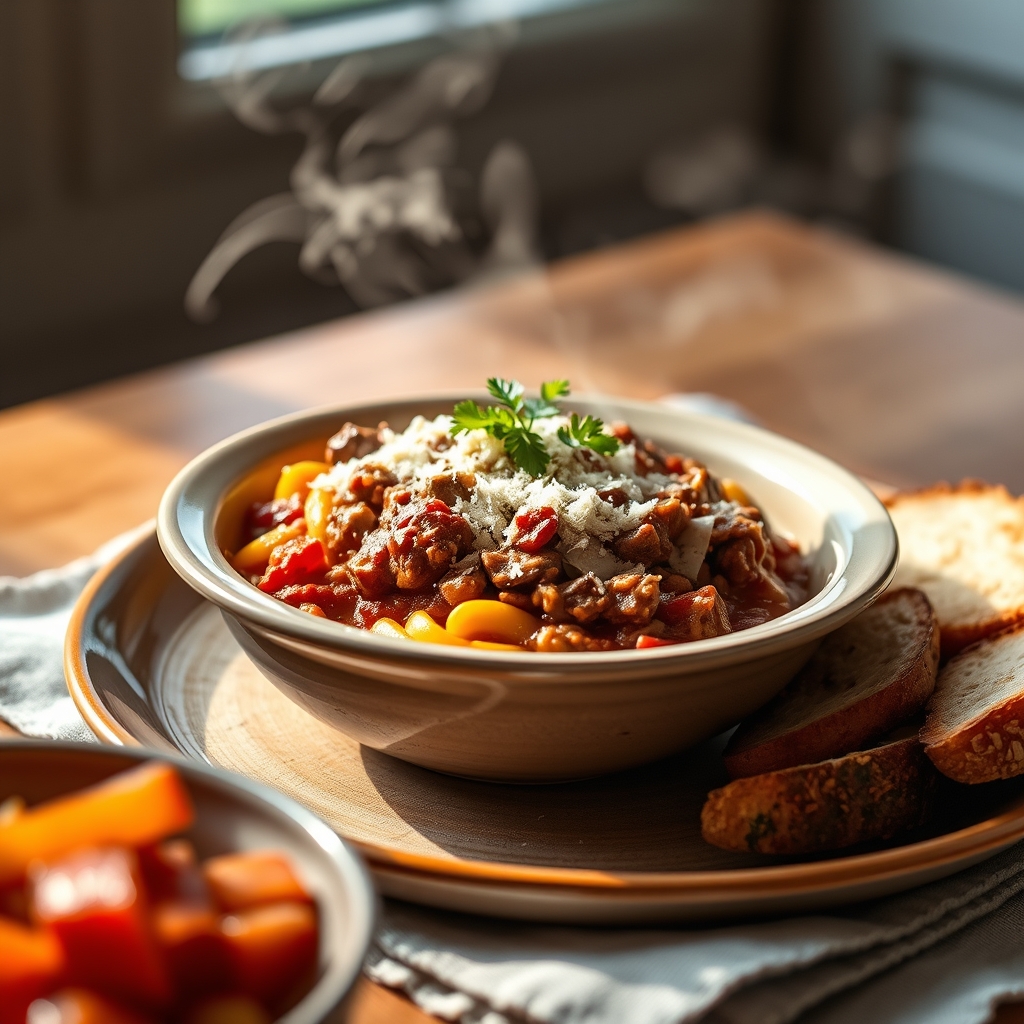
Venetian Duck Ragu is a quintessential Italian dish that embodies the rich flavors and hearty spirit of the region. This slow-cooked masterpiece is a perfect representation of how a few simple ingredients can be transformed into a complex and satisfying meal. The tender duck legs, infused with the warmth of cinnamon and the brightness of rosemary, melt into a rich and velvety sauce that coats the paccheri pasta perfectly. As the aromas of the ragu fill the kitchen, it's impossible not to be transported to the canals of Venice, where this dish is a staple of the local cuisine. With its deep, comforting flavors and generous servings, Venetian Duck Ragu is the perfect dish to share with friends and family on a chilly evening.
About this recipe
Rich Italian duck ragu
Ingredients
- 1 tbls Olive Oil
- 4 Duck Legs
- 2 finely chopped Onions
- 2 cloves minced Garlic
- 2 tsp ground Cinnamon
- 2 tsp Plain Flour
- 250 ml Red Wine
- 800 g Chopped Tomatoes
- 1 Chicken Stock Cube
- 3 sprigs Rosemary
- 2 Bay Leaves
- 1 tsp Sugar
- 2 tbs Milk
- 600 g Paccheri Pasta
- Parmesan Cheese (Grated)
Quantities recalculate automatically when you change the serving size.
Method
To begin, heat the olive oil in a large pan over medium heat, then add the duck legs and cook until browned on all sides, about 10 minutes. Remove the duck from the pan and set aside, then add the chopped onions and cook until softened, about 5 minutes. Add the minced garlic and cook for a further minute, stirring constantly to prevent burning, then stir in the ground cinnamon and plain flour and cook for an additional minute. Return the duck legs to the pan, then add the red wine, chopped tomatoes, chicken stock cube, rosemary sprigs, bay leaves, sugar, and seasoning. Bring the mixture to a simmer, then reduce the heat to low, cover the pan with a lid, and cook for 2 hours, stirring occasionally, until the duck is tender and the sauce has thickened.
After the ragu has cooked for 2 hours, carefully remove the duck legs from the pan and place them on a plate. The meat should be very tender and easily shredded with two forks. Remove and discard the fat, then shred the meat into bite-sized pieces and discard the bones. Return the shredded meat to the pan, then add the milk and simmer, uncovered, for a further 10-15 minutes, stirring occasionally, until the sauce has thickened and the meat is fully coated.
While the ragu is simmering, cook the paccheri pasta according to the package instructions until al dente, then drain and reserve a cup of the pasta water. Add the cooked pasta to the ragu and stir to coat the pasta evenly in the sauce. If the sauce seems too thick, add a splash of the reserved pasta water and stir to combine. Cook for an additional minute, then serve the ragu hot, topped with grated Parmesan cheese and a sprinkle of parsley if desired.
Cooking tips
- Use a large, heavy-bottomed pan to slow cook the ragu, as it allows for even heat distribution and prevents the sauce from burning.
- Don't skip the step of browning the duck legs, as it adds a rich, caramelized flavor to the sauce.
- Use high-quality ingredients, such as fresh rosemary and real Parmesan cheese, to develop the deep, complex flavors that this dish is known for.
- Be patient and let the ragu simmer for at least two hours, stirring occasionally, to achieve the perfect consistency.
- Don't overcook the pasta, as it can become mushy and unappetizing.
- Add a splash of water or red wine to thin out the sauce if it becomes too thick during reheating.
- Use a variety of accompaniments, such as grated Parmesan cheese and a sprinkle of parsley, to add a burst of freshness to the dish.
- Experiment with different pasta shapes and sizes to find the perfect combination for this ragu.
Substitutions
- Use beef or pork instead of duck for a different flavor profile, but keep in mind that the cooking time may vary.
- Replace the red wine with a combination of beef broth and tomato paste for a richer, more intense flavor.
- Use dried rosemary instead of fresh, but be sure to adjust the amount according to the package instructions.
- Substitute the paccheri pasta with other tube-shaped pasta, such as penne or rigatoni, for a similar texture and flavor.
- Use grated Asiago or Pecorino cheese instead of Parmesan for a different flavor profile.
- Replace the chicken stock cube with homemade chicken stock for added depth and richness.
Storage & make-ahead
To store the ragu, let it cool completely, then refrigerate or freeze in airtight containers. Reheat gently over low heat, adding a splash of water or red wine if the sauce becomes too thick. The ragu can be stored in the refrigerator for up to 3 days or frozen for up to 2 months. When reheating, be sure to stir occasionally to prevent the sauce from burning or the meat from becoming tough.
Recipe notes
One of the key factors that make this dish so successful is the use of duck legs, which are inherently more flavorful and tender than other cuts of meat. The slow cooking process breaks down the connective tissues, resulting in a fall-apart texture that's simply irresistible. The addition of cinnamon and rosemary adds a unique and intriguing flavor profile that sets this ragu apart from more traditional recipes. When serving, it's essential to have a variety of accompaniments on hand, such as grated Parmesan cheese and a sprinkle of parsley, to add a burst of freshness to the dish. To make this recipe ahead, simply prepare the ragu up to the point where the duck is shredded and returned to the sauce, then refrigerate or freeze until ready to serve. This dish can be easily scaled up or down depending on the number of guests, and the ingredients can be adjusted accordingly. When it comes to equipment, a large, heavy-bottomed pan is essential for slow cooking the ragu, as it allows for even heat distribution and prevents the sauce from burning. One common mistake that people make when cooking this dish is not cooking the ragu for a long enough period, which results in a sauce that's not rich and thick enough. It's essential to be patient and let the ragu simmer for at least two hours, stirring occasionally, to achieve the perfect consistency. Additionally, using high-quality ingredients, such as fresh rosemary and real Parmesan cheese, is crucial for developing the deep, complex flavors that this dish is known for. In terms of serving suggestions, this ragu is perfect with a variety of pasta shapes, but paccheri is the traditional choice. The tube-shaped pasta holds onto the sauce perfectly, and its rough texture provides a nice contrast to the smooth, velvety ragu. For a more substantial meal, consider serving the ragu with a side of roasted vegetables or a simple green salad. When it comes to reheating, it's best to do so gently, over low heat, to prevent the sauce from breaking or the meat from becoming tough. A splash of water or red wine can be added to thin out the sauce if it becomes too thick during reheating. Overall, Venetian Duck Ragu is a dish that's sure to become a staple in any kitchen, with its rich flavors, hearty portions, and endless possibilities for variation and experimentation.
Frequently asked questions
What type of pasta is best for this recipe?
Paccheri pasta is the traditional choice, but other tube-shaped pasta such as penne or rigatoni can be used as a substitute.
Can I make this recipe ahead?
Yes, the ragu can be made ahead and refrigerated or frozen until ready to serve. Simply prepare the ragu up to the point where the duck is shredded and returned to the sauce, then refrigerate or freeze until ready to reheat.
How do I prevent the sauce from becoming too thick?
Add a splash of water or red wine to thin out the sauce if it becomes too thick during reheating. You can also add a little more milk or cream to achieve the desired consistency.
Can I use different types of meat for this recipe?
Yes, beef or pork can be used instead of duck, but keep in mind that the cooking time may vary. The key is to cook the meat until it is tender and falls apart easily.
How do I reheat the ragu without burning the sauce?
Reheat the ragu gently over low heat, stirring occasionally, to prevent the sauce from burning or the meat from becoming tough. You can also add a splash of water or red wine to thin out the sauce if it becomes too thick.
Recipe source: TheMealDBEditorial text, photography and testing notes by LAODH.
Keep cooking
You might also like
Venetian Duck Ragu
Rich Italian duck ragu
Venetian Duck Ragu
Rich Italian duck ragu
Venetian Duck Ragu
Rich Italian duck ragu
Venetian Duck Ragu
Rich Italian duck ragu
Venetian Duck Ragu
Rich Italian duck ragu
Venetian Duck Ragu
Rich Italian duck ragu
Venetian Duck Ragu
Rich Italian duck ragu
Venetian Duck Ragu
Rich Italian duck ragu
Venetian Duck Ragu
Rich Italian duck ragu
Venetian Duck Ragu
Rich Italian duck ragu
Venetian Duck Ragu
Rich Italian duck ragu
Smoky Baked Beans
Smoky Baked Beans
Venetian Duck Ragu
Rich Italian duck ragu
Venetian Duck Ragu
Rich Italian duck ragu
Venetian Duck Ragu
Rich Italian duck ragu
Venetian Duck Ragu
Rich Italian duck ragu
Venetian Duck Ragu
Rich Italian duck ragu
Venetian Duck Ragu
Rich Italian duck ragu
Venetian Duck Ragu
Rich Italian duck ragu
Venetian Duck Ragu
Rich Italian duck ragu
Venetian Duck Ragu
Rich Italian duck ragu
Venetian Duck Ragu
Rich Italian duck ragu
Venetian Duck Ragu
Rich Italian duck ragu
Venetian Duck Ragu
Rich Italian duck ragu
Venetian Duck Ragu
Rich Italian duck ragu
Venetian Duck Ragu
Rich Italian duck ragu
Venetian Duck Ragu
Rich Italian duck ragu
Venetian Duck Ragu
Rich Italian duck ragu
Venetian Duck Ragu
Rich Italian duck ragu
Venetian Duck Ragu
Rich Italian duck ragu
Venetian Duck Ragu
Rich Italian duck ragu
Venetian Duck Ragu
Rich Italian duck ragu
Venetian Duck Ragu
Rich Italian duck ragu
Venetian Duck Ragu
Rich Italian duck ragu
Venetian Duck Ragu
Rich Italian duck ragu
Venetian Duck Ragu
Rich Italian duck ragu
Venetian Duck Ragu
Rich Italian duck ragu
Venetian Duck Ragu
Rich Italian duck ragu
Venetian Duck Ragu
Rich Italian duck ragu
Venetian Duck Ragu
Rich Italian duck ragu
Venetian Duck Ragu
Rich Italian duck ragu
Venetian Duck Ragu
Rich Italian duck ragu
Venetian Duck Ragu
Rich Italian duck ragu
Venetian Duck Ragu
Rich Italian duck ragu
Venetian Duck Ragu
Rich Italian duck ragu
Venetian Duck Ragu
Rich Italian duck ragu
Venetian Duck Ragu
Rich Italian duck ragu
Venetian Duck Ragu
Rich Italian duck ragu