
Texas Chili con Carne
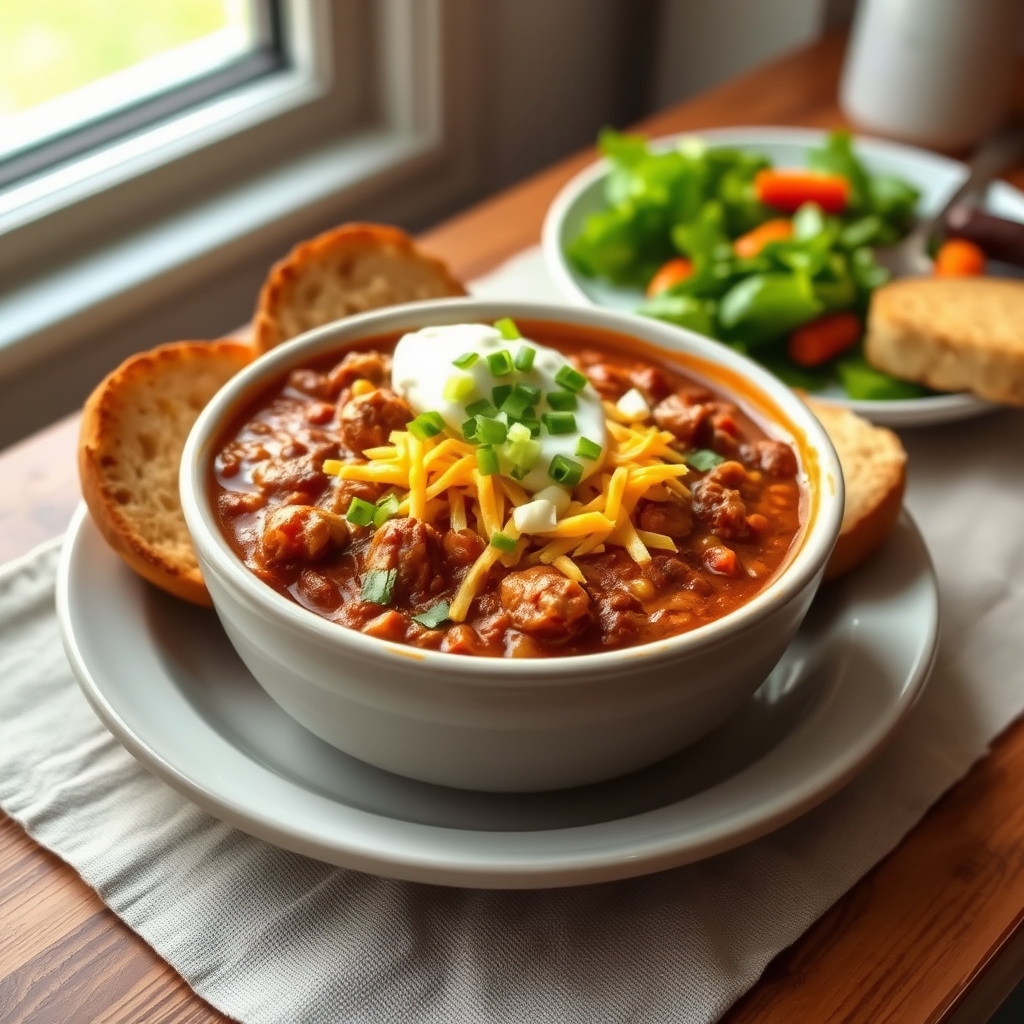
Texas Chili con Carne is a quintessential American dish that has captured the hearts and taste buds of many, despite being oddly filed under Italian cuisine. This hearty, warming stew is a masterclass in layering flavors, with the deep, slightly sweet heat of dried red chilies, the richness of slow-cooked beef, and the subtle depth of aromatic spices all combining to create a truly unforgettable culinary experience. The beauty of this dish lies in its simplicity and the patience it requires, allowing the flavors to meld together over a leisurely cooking time, resulting in a rich, velvety texture that is nothing short of comforting. Whether you're a chili aficionado or just looking for a satisfying meal to warm the soul, Texas Chili con Carne is sure to become a staple in your culinary repertoire.
About this recipe
Hearty Texas chili
Ingredients
Chili Base
- 6 red chilies (dried, about 30g)
- 910 g stewing beef (cut into 1.3cm (1/2 inch) cubes)
- 15 ml olive oil
- 2 bay leaves
Flavor Paste
- 2 garlic (peeled, about 6g)
- 7 g cumin
- 3 g oregano
- 14 g paprika
- 4 g sugar
- salt (to taste)
- black pepper (to taste)
Quantities recalculate automatically when you change the serving size.
Method
To begin, tear the dried red chilies into strips and place them in a bowl, covering them with 240ml of boiling water, and let them soak for 30 minutes to allow their deep, slightly sweet heat to infuse into the water.
After the chilies have soaked, drain them and set them aside, reserving the soaking liquid for later use in the cooking process, as it now contains the essence of the chilies.
Next, heat 15ml of olive oil in a heavy skillet over medium-high heat, and brown the beef cubes on all sides until a crust forms, which will add texture and flavor to the final dish.
Pour the reserved chili soaking liquid into the skillet with the browned beef, add two bay leaves, and bring the liquid to a boil, allowing the flavors to meld together.
Reduce the heat to low, cover the skillet, and simmer for 1 hour, letting the beef cook slowly and the flavors develop, resulting in a rich, tender texture.
Combine the soaked chilies, 2 cloves of garlic, 7g of cumin, 3g of oregano, 14g of paprika, 4g of sugar, salt, and pepper in a blender, and puree until smooth, adding a small amount of fresh water if the mixture becomes too thick, to create the flavor paste that will give the chili its distinctive taste.
Stir the chili puree into the skillet with the beef, cover, and continue to simmer for 30 minutes, allowing the flavors to meld together and the texture to become velvety.
Finally, remove and discard the bay leaves, taste, and add more salt or pepper if needed before serving, making any final adjustments to the seasoning to ensure the dish is perfectly balanced.
Cooking tips
- Always use high-quality ingredients, as they will greatly impact the final flavor and texture of the dish.
- Don't rush the cooking process, as slow simmering is essential for developing the rich, velvety texture of the chili.
- Use a heavy skillet, as it distributes heat evenly and prevents the chili from burning or sticking.
- Soak the dried chilies for the full 30 minutes to ensure they infuse their flavor into the water.
- Add a small amount of fresh water to the flavor paste if it becomes too thick, to achieve the perfect consistency.
- Taste and adjust the seasoning frequently, as the flavor of the chili can change over time.
Substitutions
- You can substitute the stewing beef with ground beef or a combination of meats, but keep in mind that the cooking time and texture may vary.
- If you can't find dried red chilies, you can use fresh or canned chilies as a substitute, but the flavor may not be as deep and complex.
- Oregano can be substituted with thyme or rosemary, but use sparingly, as they have a stronger flavor.
- Paprika can be substituted with smoked paprika for a smokier flavor, or with regular paprika for a milder flavor.
- You can add other spices or seasonings to customize the flavor of the chili to your taste.
Storage & make-ahead
The chili can be refrigerated for up to 3 days or frozen for up to 2 months. To reheat, simply warm it over low heat, adding a little water if it becomes too thick. It's also a great candidate for meal prep, as it can be portioned out and reheated as needed.
Nutrition
Per serving. Nutritional values are estimates and provided for guidance only.
Recipe notes
The key to a great Texas Chili con Carne is in the balance of its components, particularly the chili base, which provides the foundational flavor of the dish. The use of dried red chilies, rather than fresh, gives the chili a deeper, more complex heat that is essential to its character. When preparing this dish, it's crucial to not rush the cooking process, as the slow simmering of the beef and chilies is what develops the rich, velvety texture that chili con carne is known for. This dish is perfect for serving with a variety of sides, such as crusty bread, cornbread, or over rice, allowing each person to customize their meal to their liking. For those looking to make the dish ahead, it's best to prepare the chili base and flavor paste separately and then combine them just before cooking, as this will help preserve the freshness of the flavors. Scaling the recipe up or down is relatively straightforward, simply adjust the ingredient quantities accordingly, though keep in mind that the cooking time may vary slightly depending on the batch size. One piece of equipment that is essential for making this dish is a heavy skillet, as it distributes heat evenly and prevents the chili from burning or sticking. One common mistake people make when cooking chili con carne is not soaking the dried chilies long enough, which can result in a bitter, uneven flavor. To avoid this, make sure to soak the chilies for the full 30 minutes, and don't be afraid to add a little more water if the puree becomes too thick. Another important aspect of this dish is its versatility, it can be made in large quantities for gatherings or events, and it's also a great option for meal prep, as it can be refrigerated or frozen for later use. The flavor of the chili will only improve with time, making it a great candidate for making ahead. In terms of variations, there are countless ways to customize this dish to your taste, from adding different types of meat or vegetables, to experimenting with various spices and seasonings. However, the core ingredients and method should remain the same, as they provide the foundation for the dish's unique flavor and texture. For those new to cooking chili con carne, it's worth noting that the dish is quite forgiving, and small mistakes won't necessarily ruin the final product. However, attention to detail and patience are still essential for achieving the best results. Overall, Texas Chili con Carne is a dish that rewards patience and attention to detail, and with a little practice, you'll be able to create a truly unforgettable culinary experience that will leave your friends and family begging for more.
Frequently asked questions
What type of beef is best for chili con carne?
Stewing beef is the best type of beef for chili con carne, as it becomes tender and flavorful with slow cooking.
Can I use fresh chilies instead of dried?
While you can use fresh chilies, dried chilies provide a deeper, more complex heat that is essential to the character of the dish.
How do I prevent the chili from becoming too thick?
You can add a small amount of fresh water to the flavor paste or the chili itself if it becomes too thick, to achieve the perfect consistency.
Can I make this dish ahead?
Yes, you can make the chili base and flavor paste ahead, and then combine them just before cooking, to preserve the freshness of the flavors.
What is the best way to serve chili con carne?
Chili con carne is perfect for serving with a variety of sides, such as crusty bread, cornbread, or over rice, allowing each person to customize their meal to their liking.
Recipe source: RecipeAPIEditorial text, photography and testing notes by LAODH.
Keep cooking
You might also like

Texas Chili con Carne
Hearty Texas chili
Texas Chili con Carne
Hearty Texas chili
Texas Chili con Carne
Hearty Texas chili
Texas Chili con Carne
Hearty Texas chili
Texas Chili con Carne
Hearty Texas chili
Texas Chili con Carne
Hearty Texas chili
Texas Chili con Carne
Hearty Texas chili
Texas Chili con Carne
Hearty Texas chili
Texas Chili con Carne
Hearty Texas chili
Texas Chili con Carne
Hearty Texas chili
Texas Chili con Carne
Hearty Texas chili
Chipotle Black Bean Soup with Avocado Cream
Smoky black bean soup with avocado cream
Texas Chili con Carne
Hearty Texas chili
Texas Chili con Carne
Hearty Texas chili
Texas Chili con Carne
Hearty Texas chili
Texas Chili con Carne
Hearty Texas chili
Texas Chili con Carne
Hearty Texas chili
Texas Chili con Carne
Hearty Texas chili
Texas Chili con Carne
Hearty Texas chili
Texas Chili con Carne
Hearty Texas chili
Texas Chili con Carne
Hearty Texas chili
Texas Chili con Carne
Hearty Texas chili
Texas Chili con Carne
Hearty Texas chili
Texas Chili con Carne
Hearty Texas chili
Texas Chili con Carne
Hearty Texas chili
Texas Chili con Carne
Hearty Texas chili
Texas Chili con Carne
Hearty Texas chili
Texas Chili con Carne
Hearty Texas chili
Texas Chili con Carne
Hearty Texas chili
Texas Chili con Carne
Hearty Texas chili
Texas Chili con Carne
Hearty Texas chili
Texas Chili con Carne
Hearty Texas chili
Texas Chili con Carne
Hearty Texas chili
Texas Chili con Carne
Hearty Texas chili
Texas Chili con Carne
Hearty Texas chili
Texas Chili con Carne
Hearty Texas chili
Texas Chili con Carne
Hearty Texas chili
Texas Chili con Carne
Hearty Texas chili
Texas Chili con Carne
Hearty Texas chili
Texas Chili con Carne
Hearty Texas chili
Texas Chili con Carne
Hearty Texas chili
Texas Chili con Carne
Hearty Texas chili
Texas Chili con Carne
Hearty Texas chili
Texas Chili con Carne
Hearty Texas chili
Texas Chili con Carne
Hearty Texas chili
Texas Chili con Carne
Hearty Texas chili
Texas Chili con Carne
Hearty Texas chili
Texas Chili con Carne
Hearty Texas chili