
Siamese Fried Noodle (Mee Siam)
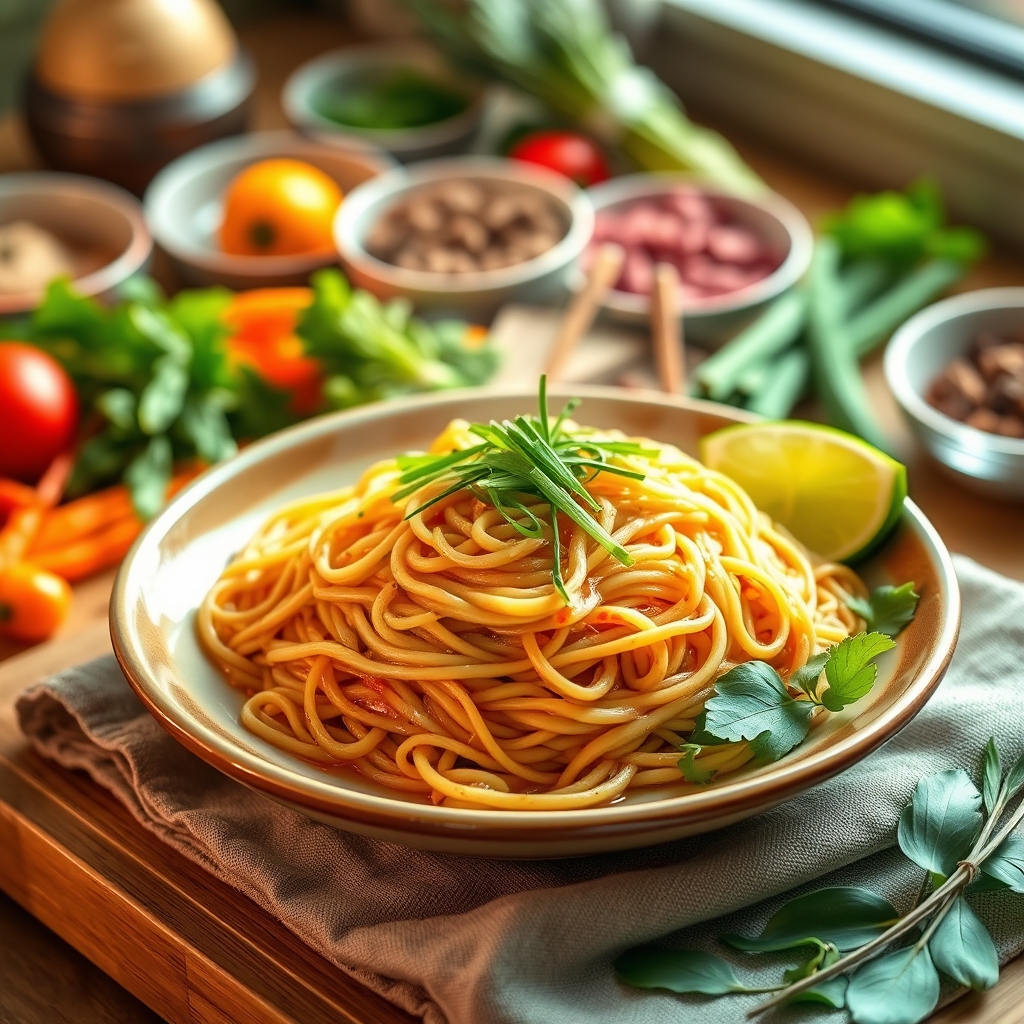
Siamese Fried Noodle, or Mee Siam, is a dish that masterfully blends the bold flavors of Southeast Asia with the delicate texture of rice vermicelli, creating a culinary experience that is both familiar and exotic. This beloved dish has a rich history, with its origins tracing back to the cultural exchange between Thailand and Malaysia. The combination of succulent prawns, firm tofu, and crunchy beansprouts, all tied together with a complex array of spices and seasonings, makes for a truly unforgettable meal. Whether you're a seasoned foodie or just looking to spice up your weekly dinner routine, Mee Siam is sure to delight. With its perfect balance of sweet, sour, and savory flavors, this dish is a true reflection of the region's culinary expertise. The aroma of sizzling ingredients and the sound of sputtering oil will transport you to the bustling streets of Southeast Asia, making this dish a must-try for anyone looking to explore the flavors of the region.
About this recipe
Siamese Fried Noodle
Ingredients
- 300 grams rice vermicelli - soaked in water (for 5 minutes, meehoon)
- 300 grams prawns (shelled, deveined)
- 2 pieces tofu (firm, sliced)
- 200 grams beansprouts
- 150 grams chives (cut into 2 cm length)
- 80 grams shrimps (dried, chopped)
- 4 kaffir lime leaves (shredded, finely)
- 1 cup oil
- 4 cloves garlic
- 4 shallots
- 1 small knob turmeric (fresh, or)
- 3 birds eye chillies (up to individual)
- 2 candlenuts
- 1 stalk lemongrass
- 3 tablespoons ginger flower (chopped, bunga kantan)
- 2 teaspoons sugar
- 1 teaspoon chicken stock granules
- 0.5 teaspoon pepper
- 2 tablespoons fish sauce
- 1 tablespoon soy sauce
- 0.5 tablespoon tamarind paste
- 2 cups water
Quantities recalculate automatically when you change the serving size.
Method
To begin, heat a generous amount of oil in a large frying pan over medium-high heat, then lightly fry the chopped dried shrimps and tofu slices separately, removing them from the pan once they are golden brown and crispy.
Next, stir-fry the pounded ingredients, including the garlic, shallots, and turmeric, along with the shredded kaffir lime leaves, until the mixture is aromatic and fragrant.
Add the prawns to the pan and fry until they are half-cooked, then remove them from the pan and set them aside, leaving the flavorful oil and ingredients behind.
Now, add the seasonings, including the sugar, chicken stock granules, pepper, fish sauce, soy sauce, and tamarind paste, to the pan, stirring to combine, then bring the mixture to a boil, allowing the flavors to meld together.
Add the soaked and drained rice vermicelli to the pan, stir-frying the noodles quickly to combine them with the flavorful oil and ingredients.
Mix in the dried shrimps, tofu slices, prawns, chives, and beansprouts, tossing everything together to create a harmonious balance of flavors and textures.
Finally, serve the Mee Siam hot, garnished with a squeeze of fresh lime or lemon juice, and enjoy the delightful combination of flavors and textures in this beloved Southeast Asian dish.
Cooking tips
- To achieve the perfect texture, it's essential to soak the rice vermicelli in water for the right amount of time.
- When stir-frying the ingredients, it's crucial to use high heat and to stir constantly, ensuring that each component is cooked to perfection.
- The use of fresh ingredients, such as chives and lemongrass, adds a brightness and depth to the dish that is hard to replicate with dried or frozen alternatives.
- To avoid overcooking the noodles, it's essential to cook them for the right amount of time and to stir-fry them quickly.
- The addition of a bit of oil to the pan before stir-frying the ingredients can help to prevent them from sticking and to create a smooth and silky texture.
- When serving Mee Siam, it's best to keep things simple, allowing the complex flavors of the dish to take center stage.
- The use of a wok or large frying pan is essential for achieving the perfect stir-fry, as it allows for the quick and efficient cooking of ingredients.
- To add a bit of spice to the dish, the addition of extra birds eye chillies or a sprinkle of chili flakes can add an extra kick.
Substitutions
- For a vegetarian version of the dish, the prawns can be replaced with extra-firm tofu or tempeh, marinated in a mixture of soy sauce and spices.
- To reduce the heat of the dish, the birds eye chillies can be omitted or replaced with a milder pepper, such as a bell pepper.
- For a gluten-free version of the dish, the soy sauce can be replaced with a gluten-free alternative, such as tamari or coconut aminos.
- The dried shrimps can be replaced with dried scallops or dried fish, adding a different texture and flavor to the dish.
- The fish sauce can be replaced with a vegetarian alternative, such as nam pla or a homemade version made from mushrooms and spices.
Storage & make-ahead
To store Mee Siam, it's best to cool the dish to room temperature, then refrigerate or freeze it. When reheating, it's essential to stir-fry the noodles and ingredients quickly, ensuring that they retain their delicate texture and flavor. The dish can be refrigerated for up to 3 days or frozen for up to 2 months. When reheating, it's best to add a bit of oil to the pan to prevent the ingredients from sticking and to create a smooth and silky texture.
Recipe notes
The key to a great Mee Siam lies in its ability to balance a multitude of flavors and textures, creating a dish that is both harmonious and exciting. The use of fresh ingredients, such as chives and lemongrass, adds a brightness and depth to the dish that is hard to replicate with dried or frozen alternatives. When serving Mee Siam, it's best to keep things simple, allowing the complex flavors of the dish to take center stage. A side of fresh fruit or a simple green salad provides a nice contrast to the rich and savory noodles. For those looking to make the dish ahead of time, it's best to cook the noodles and prepare the ingredients separately, then combine them just before serving. This will help to preserve the texture and flavor of the dish. When scaling the recipe up or down, it's essential to maintain the balance of flavors and ingredients, ensuring that each component is proportional to the others. The equipment used in the preparation of Mee Siam is also crucial, with a good wok or large frying pan being essential for achieving the perfect stir-fry. One common mistake people make when cooking Mee Siam is overcooking the noodles, resulting in a mushy and unappetizing texture. To avoid this, it's essential to cook the noodles for the right amount of time and to stir-fry them quickly, ensuring they retain their delicate texture. The flavors in Mee Siam are a perfect reflection of the cultural exchange between Thailand and Malaysia, with the use of ingredients such as kaffir lime leaves and birds eye chillies adding a distinctly Southeast Asian flavor to the dish. The combination of these ingredients with more traditional Chinese ingredients, such as soy sauce and candlenuts, creates a unique and exciting flavor profile that is sure to delight. In addition to its exciting flavor profile, Mee Siam is also a highly versatile dish, lending itself well to a variety of substitutions and variations. For those looking to add a bit of spice to their meal, the addition of extra birds eye chillies or a sprinkle of chili flakes can add an extra kick. Alternatively, for those looking to reduce the heat, the omission of the chillies or the addition of a bit of coconut milk can help to cool things down. When it comes to equipment, a good wok or large frying pan is essential for achieving the perfect stir-fry. The use of a wok allows for the quick and efficient cooking of ingredients, ensuring that each component is cooked to perfection. In addition to a wok, a blender or food processor is also necessary for pounding the ingredients, such as the garlic and shallots, into a smooth paste. Overall, Mee Siam is a dish that is sure to delight, with its complex flavor profile and delicate texture making it a true standout in the world of Southeast Asian cuisine. Whether you're a seasoned foodie or just looking to try something new, this dish is sure to become a favorite.
Frequently asked questions
What is the origin of Mee Siam?
Mee Siam is a dish that originated in Southeast Asia, with its roots tracing back to the cultural exchange between Thailand and Malaysia.
What type of noodles are used in Mee Siam?
The noodles used in Mee Siam are rice vermicelli, which are made from rice flour and water.
Can I make Mee Siam ahead of time?
Yes, you can make Mee Siam ahead of time, but it's best to cook the noodles and prepare the ingredients separately, then combine them just before serving.
How do I store Mee Siam?
To store Mee Siam, it's best to cool the dish to room temperature, then refrigerate or freeze it.
Can I substitute the prawns with other ingredients?
Yes, you can substitute the prawns with other ingredients, such as extra-firm tofu or tempeh, marinated in a mixture of soy sauce and spices.
Recipe source: SpoonacularEditorial text, photography and testing notes by LAODH.
Keep cooking
You might also like
Siamese Fried Noodle (Mee Siam)
Siamese Fried Noodle
Siamese Fried Noodle (Mee Siam)
Siamese Fried Noodle
Siamese Fried Noodle (Mee Siam)
Siamese Fried Noodle
Siamese Fried Noodle (Mee Siam)
Siamese Fried Noodle
Siamese Fried Noodle (Mee Siam)
Siamese Fried Noodle
Siamese Fried Noodle (Mee Siam)
Siamese Fried Noodle
Siamese Fried Noodle (Mee Siam)
Siamese Fried Noodle
Siamese Fried Noodle (Mee Siam)
Siamese Fried Noodle
Siamese Fried Noodle (Mee Siam)
Siamese Fried Noodle
Siamese Fried Noodle (Mee Siam)
Siamese Fried Noodle
Siamese Fried Noodle (Mee Siam)
Siamese Fried Noodle
Chickpea Fajitas
Mexican Chickpea Fajitas
Siamese Fried Noodle (Mee Siam)
Siamese Fried Noodle
Siamese Fried Noodle (Mee Siam)
Siamese Fried Noodle
Siamese Fried Noodle (Mee Siam)
Siamese Fried Noodle
Siamese Fried Noodle (Mee Siam)
Siamese Fried Noodle
Siamese Fried Noodle (Mee Siam)
Siamese Fried Noodle
Siamese Fried Noodle (Mee Siam)
Siamese Fried Noodle
Siamese Fried Noodle (Mee Siam)
Siamese Fried Noodle
Siamese Fried Noodle (Mee Siam)
Siamese Fried Noodle
Siamese Fried Noodle (Mee Siam)
Siamese Fried Noodle
Siamese Fried Noodle (Mee Siam)
Siamese Fried Noodle
Siamese Fried Noodle (Mee Siam)
Siamese Fried Noodle
Siamese Fried Noodle (Mee Siam)
Siamese Fried Noodle
Siamese Fried Noodle (Mee Siam)
Siamese Fried Noodle
Siamese Fried Noodle (Mee Siam)
Siamese Fried Noodle
Siamese Fried Noodle (Mee Siam)
Siamese Fried Noodle
Siamese Fried Noodle (Mee Siam)
Siamese Fried Noodle
Siamese Fried Noodle (Mee Siam)
Siamese Fried Noodle
Siamese Fried Noodle (Mee Siam)
Siamese Fried Noodle
Siamese Fried Noodle (Mee Siam)
Siamese Fried Noodle
Siamese Fried Noodle (Mee Siam)
Siamese Fried Noodle
Siamese Fried Noodle (Mee Siam)
Siamese Fried Noodle
Siamese Fried Noodle (Mee Siam)
Siamese Fried Noodle
Siamese Fried Noodle (Mee Siam)
Siamese Fried Noodle
Siamese Fried Noodle (Mee Siam)
Siamese Fried Noodle
Siamese Fried Noodle (Mee Siam)
Siamese Fried Noodle
Siamese Fried Noodle (Mee Siam)
Siamese Fried Noodle
Siamese Fried Noodle (Mee Siam)
Siamese Fried Noodle
Siamese Fried Noodle (Mee Siam)
Siamese Fried Noodle
Siamese Fried Noodle (Mee Siam)
Siamese Fried Noodle
Siamese Fried Noodle (Mee Siam)
Siamese Fried Noodle
Siamese Fried Noodle (Mee Siam)
Siamese Fried Noodle
Siamese Fried Noodle (Mee Siam)
Siamese Fried Noodle
Siamese Fried Noodle (Mee Siam)
Siamese Fried Noodle
Siamese Fried Noodle (Mee Siam)
Siamese Fried Noodle
Siamese Fried Noodle (Mee Siam)
Siamese Fried Noodle
Siamese Fried Noodle (Mee Siam)
Siamese Fried Noodle