
Red onion pickle
In the heart of Norway, a simple yet elegant condiment has been a staple for centuries - the red onion pickle. This sweet and tangy delight is a perfect accompaniment to a variety of dishes, from traditional Norwegian fare to modern culinary creations. The combination of thinly sliced red onions, cider vinegar, and a hint of sugar and spice creates a flavor profile that is both bold and refined. With its ease of preparation and versatility in usage, it's no wonder this condiment has become a favorite among home cooks and professional chefs alike. Whether you're looking to add a pop of color and flavor to your next dinner party or simply want to elevate your everyday meals, the red onion pickle is an excellent choice. Its healthy properties and lack of cooking time make it an ideal option for those seeking a quick and nutritious addition to their diet. As we delve into the world of Norwegian cuisine, it becomes clear that this humble condiment is a true gem, waiting to be discovered and cherished by food enthusiasts around the globe.
About this recipe
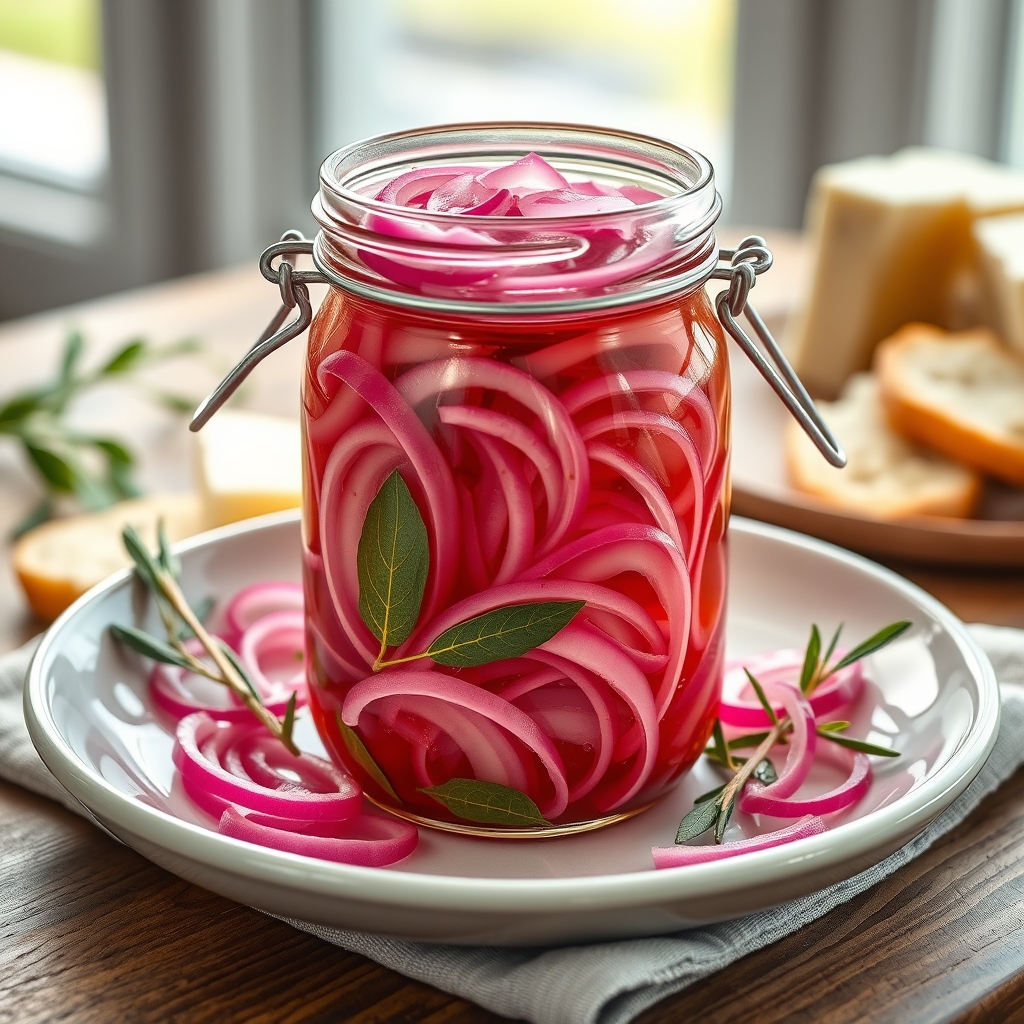
Norwegian red onion pickle
Ingredients
- 3 Large Red Onions
- 2 tsp Sea Salt
- 200 ml Cider Vinegar
- 50 g Granulated Sugar
- 1 tsp Black Pepper
- 4 Bay Leaves
Quantities recalculate automatically when you change the serving size.
Method
To begin, peel the red onions and cut them in half from top to bottom, then finely slice them into half-moon pieces. Place the sliced onions in a colander set over a bowl and sprinkle them with sea salt, gently turning the onions with your hands to ensure they're evenly coated. Let the onions sit for about an hour, allowing them to brine and release their natural sweetness.
While the onions are brining, combine the cider vinegar, water, and granulated sugar in a saucepan. Bring the mixture to a simmer over medium heat, stirring occasionally to help the sugar dissolve. Cook for a couple of minutes, then set the mixture aside to cool.
Once the onions have finished brining, pack them into sterilized jars, sprinkling a pinch of black pepper over the onions as you go. Pour the warm vinegar mixture over the onions, making sure they're completely covered. Finish by tucking a couple of bay leaves down the side of each jar, then seal the jars tightly. The pickles are now ready to be stored in the fridge and enjoyed within the next 4 weeks.
Cooking tips
- Use high-quality ingredients, including fresh onions and good-quality cider vinegar, to ensure the best flavor.
- Don't skip the brining step, as it's essential for bringing out the natural sweetness of the onions.
- Adjust the amount of sugar to your taste, depending on how sweet or tangy you like your pickles.
- Use sterilized jars to ensure the pickles remain fresh and free from contamination.
- Experiment with different spices and seasonings, such as mustard seeds or coriander, to add unique flavors to your pickles.
- Store the pickles in the fridge to slow down the fermentation process and keep them fresh for longer.
- Let the pickles sit at room temperature for a few hours before serving to allow the flavors to meld together.
- Use the pickles as a topping for soups, stews, and salads, or as a side dish for roasted vegetables and grilled meats.
Substitutions
- Use white onions instead of red onions for a slightly sweeter flavor.
- Replace the cider vinegar with white wine vinegar or apple cider vinegar for a different flavor profile.
- Add a pinch of red pepper flakes for a spicy kick.
- Use honey or maple syrup instead of granulated sugar for a more natural sweetener.
- Omit the bay leaves for a simpler flavor profile.
Storage & make-ahead
Store the pickles in the fridge to slow down the fermentation process and keep them fresh for longer. Make sure to seal the jars tightly and keep them away from direct sunlight. The pickles can be stored for up to 4 weeks in the fridge. If you notice any signs of spoilage, such as mold or sliminess, discard the pickles immediately.
Recipe notes
The red onion pickle is a masterclass in balance and restraint, with each ingredient playing a crucial role in the final product. The sweetness of the sugar and the tanginess of the cider vinegar work in perfect harmony to create a flavor profile that is both familiar and exciting. One of the key factors that sets this condiment apart is its versatility - it can be served alongside a variety of dishes, from grilled meats and fish to salads and sandwiches. When it comes to making it ahead, the red onion pickle is a great candidate for advance preparation, as it can be stored in the fridge for up to 4 weeks. To scale it up or down, simply adjust the ingredient quantities accordingly, keeping in mind that the ratio of onions to vinegar is crucial to the final product. In terms of equipment, it's essential to use sterilized jars to ensure the pickles remain fresh and free from contamination. Perhaps the most common mistake people make when preparing this condiment is not allowing the onions to brine for a sufficient amount of time, which can result in a less flavorful final product. By taking the time to properly prepare the onions and balance the flavors, you'll be rewarded with a delicious and healthy condiment that's sure to become a staple in your kitchen. When serving the red onion pickle, it's best to pair it with dishes that complement its sweet and tangy flavor profile. Grilled meats and fish are a natural pairing, as the acidity of the vinegar helps to cut through the richness of the protein. It's also delicious served alongside salads and sandwiches, where it adds a pop of color and flavor. For those looking to get creative, the red onion pickle can also be used as a topping for soups and stews, or as a side dish for roasted vegetables. In addition to its versatility, the red onion pickle is also incredibly easy to make, requiring no cooking time and only a few minutes of hands-on preparation. This makes it an ideal option for busy home cooks who want to add a healthy and delicious condiment to their meals without sacrificing too much time. By following a few simple steps and using a handful of ingredients, you can create a delicious and healthy condiment that's sure to become a staple in your kitchen. As with any condiment, the key to making a great red onion pickle is to use high-quality ingredients and to take the time to properly prepare each component. This means using fresh and flavorful onions, as well as a good-quality cider vinegar that's free from additives and preservatives. By taking the time to select the best ingredients and to follow a few simple steps, you'll be rewarded with a delicious and healthy condiment that's sure to impress even the most discerning palates. Finally, it's worth noting that the red onion pickle is a great option for those looking to add a healthy and nutritious condiment to their diet. With its lack of cooking time and emphasis on fresh, whole ingredients, it's an excellent choice for health-conscious home cooks who want to add a delicious and flavorful condiment to their meals without sacrificing nutrition. By incorporating the red onion pickle into your diet, you'll be adding a boost of flavor and nutrition to your meals, and setting yourself up for a lifetime of healthy and delicious eating.
Frequently asked questions
How long do the pickles last in the fridge?
The pickles can be stored for up to 4 weeks in the fridge.
Can I use white onions instead of red onions?
Yes, you can use white onions instead of red onions, but keep in mind that they may have a slightly sweeter flavor.
What type of vinegar is best to use?
Cider vinegar is the best type of vinegar to use for this recipe, but you can also experiment with other types of vinegar, such as white wine vinegar or apple cider vinegar.
Can I add other spices or seasonings to the pickles?
Yes, you can experiment with different spices and seasonings, such as mustard seeds or coriander, to add unique flavors to your pickles.
How do I know if the pickles have gone bad?
If you notice any signs of spoilage, such as mold or sliminess, discard the pickles immediately.
Recipe source: TheMealDBEditorial text, photography and testing notes by LAODH.
Keep cooking
You might also like
Red onion pickle
Norwegian red onion pickle
Red onion pickle
Norwegian red onion pickle
Red onion pickle
Norwegian red onion pickle
Red onion pickle
Norwegian red onion pickle
Red onion pickle
Norwegian red onion pickle
Red onion pickle
Norwegian red onion pickle
Red onion pickle
Norwegian red onion pickle
Red onion pickle
Norwegian red onion pickle
Red onion pickle
Norwegian red onion pickle
Red onion pickle
Norwegian red onion pickle
Red onion pickle
Norwegian red onion pickle

Vegan Chocolate Cake
Vegan Chocolate Cake
Red onion pickle
Norwegian red onion pickle
Red onion pickle
Norwegian red onion pickle
Red onion pickle
Norwegian red onion pickle
Red onion pickle
Norwegian red onion pickle
Red onion pickle
Norwegian red onion pickle
Red onion pickle
Norwegian red onion pickle
Red onion pickle
Norwegian red onion pickle
Red onion pickle
Norwegian red onion pickle
Red onion pickle
Norwegian red onion pickle
Red onion pickle
Norwegian red onion pickle
Red onion pickle
Norwegian red onion pickle
Red onion pickle
Norwegian red onion pickle
Red onion pickle
Norwegian red onion pickle
Red onion pickle
Norwegian red onion pickle
Red onion pickle
Norwegian red onion pickle
Red onion pickle
Norwegian red onion pickle
Red onion pickle
Norwegian red onion pickle
Red onion pickle
Norwegian red onion pickle
Red onion pickle
Norwegian red onion pickle
Red onion pickle
Norwegian red onion pickle
Red onion pickle
Norwegian red onion pickle
Red onion pickle
Norwegian red onion pickle
Red onion pickle
Norwegian red onion pickle
Red onion pickle
Norwegian red onion pickle
Red onion pickle
Norwegian red onion pickle
Red onion pickle
Norwegian red onion pickle
Red onion pickle
Norwegian red onion pickle
Red onion pickle
Norwegian red onion pickle
Red onion pickle
Norwegian red onion pickle
Red onion pickle
Norwegian red onion pickle
Red onion pickle
Norwegian red onion pickle
Red onion pickle
Norwegian red onion pickle
Red onion pickle
Norwegian red onion pickle
Red onion pickle
Norwegian red onion pickle
Red onion pickle
Norwegian red onion pickle
Red onion pickle
Norwegian red onion pickle