
Pesto Pasta
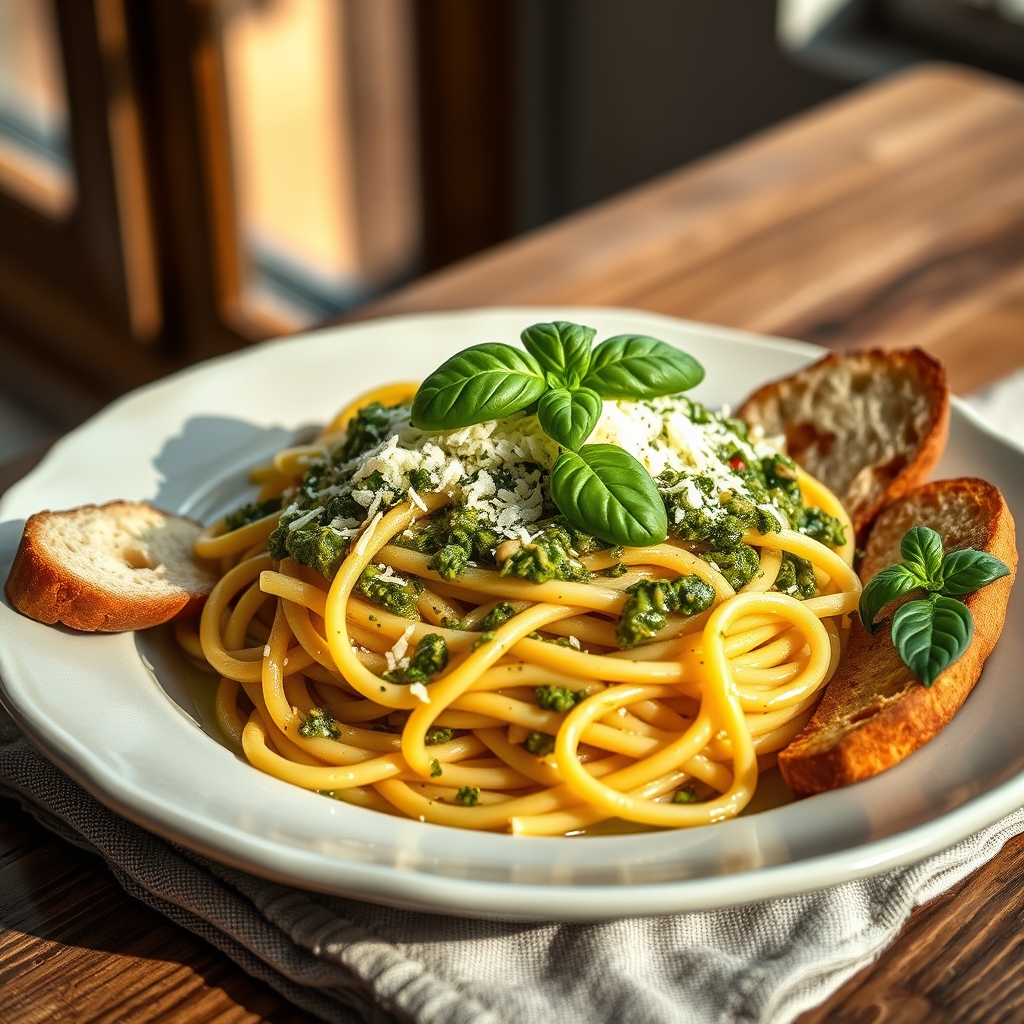
Pesto pasta is a quintessential Italian dish that never fails to impress, and for good reason - the combination of freshly made pesto, al dente pasta, and a sprinkle of parmesan cheese is a match made in heaven. The key to this dish lies in its simplicity, allowing each ingredient to shine in its own right. With a short hands-on time of just 15 minutes and a cooking time of 15 minutes, this recipe is perfect for a quick and delicious weeknight dinner. The toasted walnuts add a delightful depth of flavor, while the fresh basil provides a bright and refreshing note. Whether you're a seasoned cook or a beginner in the kitchen, this recipe is sure to become a staple in your repertoire.
About this recipe
Classic Italian pesto pasta
Ingredients
- 0.33 cup walnut (toasted)
- 2 clove garlic (roughly chopped)
- 2 cup fresh basil (fresh)
- 0.5 tsp salt
- 0.25 tsp black pepper (freshly ground)
- 0.67 cup olive oil
- 0.5 cup parmesan (grated)
- 1 lb pasta
- salt
- black pepper (freshly ground)
- parmesan
- fresh basil (fresh)
Quantities recalculate automatically when you change the serving size.
Method
To start, bring a large pot of generously salted water to a boil, then add the pasta and cook until it's al dente, reserving 1 cup of the cooking water before draining the pasta in a colander.
While the pasta is cooking, make the pesto by placing the toasted walnuts and roughly chopped garlic in the bowl of a food processor fitted with a steel blade, processing until coarsely chopped, then adding the fresh basil, salt, and pepper and processing until the mixture resembles a paste.
With the processor running, slowly pour in the olive oil through the feed tube, processing until the pesto is thoroughly blended, then add the grated parmesan and process for another minute before tossing the cooked pasta with the pesto and some of the reserved cooking water, adjusting the consistency as needed.
Cooking tips
- To toast the walnuts, simply spread them on a baking sheet and bake in a preheated oven at 350°F for 5-7 minutes, or until fragrant and lightly browned.
- When making the pesto, be sure to process the ingredients in the right order, as this will help to achieve the perfect consistency.
- To prevent the pesto from becoming too thick, be sure to add the olive oil slowly and process until thoroughly blended.
- When cooking the pasta, be sure to use a large pot of generously salted water, as this will help to season the pasta and bring out its natural flavor.
- To add some extra flavor to the dish, consider adding some protein, such as grilled chicken or shrimp, or some other ingredients, such as cherry tomatoes or sliced bell peppers.
- To make this recipe even easier, consider using a few shortcuts, such as store-bought pesto or pre-cooked pasta, but be sure to taste and adjust as needed.
- When serving the pesto pasta, be sure to top it with some grated parmesan cheese and a sprinkle of fresh basil, as this will help to add some extra flavor and texture to the dish.
- To reheat the pesto pasta, simply toss it with a little bit of the reserved cooking water and heat it over low heat, stirring constantly, until warmed through.
Substitutions
- If you don't have walnuts, you can substitute them with pine nuts or almonds, but keep in mind that this will affect the flavor of the pesto.
- If you don't have fresh basil, you can substitute it with dried basil, but be sure to use less of it, as dried herbs are more potent than fresh ones.
- If you don't have parmesan cheese, you can substitute it with other hard cheeses, such as pecorino or romano, but keep in mind that this will affect the flavor of the dish.
- If you don't have olive oil, you can substitute it with other oils, such as avocado oil or grapeseed oil, but keep in mind that this will affect the flavor of the pesto.
- If you don't have garlic, you can omit it or substitute it with other aromatics, such as shallots or onions, but keep in mind that this will affect the flavor of the pesto.
Storage & make-ahead
To store the pesto pasta, let it cool to room temperature, then transfer it to an airtight container and refrigerate for up to 3 days. To reheat, simply toss it with a little bit of the reserved cooking water and heat it over low heat, stirring constantly, until warmed through. You can also freeze the pesto pasta for up to 2 months, then thaw and reheat as needed.
Nutrition
Per serving. Nutritional values are estimates and provided for guidance only.
Recipe notes
The beauty of pesto pasta lies in its ability to be both a comforting and elegant dish, making it perfect for any occasion. It's a great option for a quick weeknight dinner, but it's also impressive enough to serve at a dinner party. To take this dish to the next level, consider serving it with a simple green salad or a side of roasted vegetables. If you're looking to make it ahead, you can prepare the pesto up to a day in advance and store it in the fridge, then cook the pasta just before serving. When it comes to scaling this recipe up or down, the key is to maintain the ratio of pasta to pesto, so be sure to adjust the ingredient quantities accordingly. In terms of equipment, a food processor is essential for making the pesto, as it allows you to achieve the perfect consistency. One thing that many people get wrong when making pesto pasta is not reserving enough of the cooking water, which is essential for achieving the right consistency. By following this recipe and taking the time to get it just right, you'll be rewarded with a dish that's sure to become a favorite. When cooking the pasta, be sure to use a large pot of generously salted water, as this will help to season the pasta and bring out its natural flavor. It's also important to cook the pasta until it's al dente, as this will help it to hold onto the pesto sauce. In terms of the pesto itself, be sure to use high-quality ingredients, such as fresh basil and parmesan cheese, as these will make a big difference in the final flavor of the dish. In addition to its great flavor, pesto pasta is also a very versatile dish, and can be served in a variety of ways. Consider adding some protein, such as grilled chicken or shrimp, to make it a more substantial meal. You could also add some other ingredients, such as cherry tomatoes or sliced bell peppers, to add some extra flavor and nutrients. To make this recipe even easier, consider using a few shortcuts, such as store-bought pesto or pre-cooked pasta. However, keep in mind that these shortcuts may affect the final flavor and texture of the dish, so be sure to taste and adjust as needed. Overall, pesto pasta is a dish that's sure to please even the pickiest of eaters, and its simplicity and versatility make it a great option for any occasion.
Frequently asked questions
What type of pasta is best for pesto pasta?
The best type of pasta for pesto pasta is a long, thin shape, such as spaghetti or linguine, as this will help the pesto sauce to coat the pasta evenly.
Can I make pesto pasta ahead of time?
Yes, you can make the pesto ahead of time and store it in the fridge for up to a day, then cook the pasta just before serving.
How do I prevent the pesto from becoming too thick?
To prevent the pesto from becoming too thick, be sure to add the olive oil slowly and process until thoroughly blended.
Can I substitute other ingredients for the basil?
Yes, you can substitute other herbs, such as spinach or kale, for the basil, but keep in mind that this will affect the flavor of the pesto.
How do I reheat the pesto pasta?
To reheat the pesto pasta, simply toss it with a little bit of the reserved cooking water and heat it over low heat, stirring constantly, until warmed through.
Recipe source: TinyPlatesEditorial text, photography and testing notes by LAODH.
Keep cooking
You might also like
Pesto Pasta
Classic Italian pesto pasta
Pesto Pasta
Classic Italian pesto pasta
Pesto Pasta
Classic Italian pesto pasta
Pesto Pasta
Classic Italian pesto pasta
Pesto Pasta
Classic Italian pesto pasta
Pesto Pasta
Classic Italian pesto pasta
Pesto Pasta
Classic Italian pesto pasta
Pesto Pasta
Classic Italian pesto pasta
Pesto Pasta
Classic Italian pesto pasta
Pesto Pasta
Classic Italian pesto pasta
Pesto Pasta
Classic Italian pesto pasta
Smoky Baked Beans
Smoky Baked Beans
Pesto Pasta
Classic Italian pesto pasta
Pesto Pasta
Classic Italian pesto pasta
Pesto Pasta
Classic Italian pesto pasta
Pesto Pasta
Classic Italian pesto pasta
Pesto Pasta
Classic Italian pesto pasta
Pesto Pasta
Classic Italian pesto pasta
Pesto Pasta
Classic Italian pesto pasta
Pesto Pasta
Classic Italian pesto pasta
Pesto Pasta
Classic Italian pesto pasta
Pesto Pasta
Classic Italian pesto pasta
Pesto Pasta
Classic Italian pesto pasta
Pesto Pasta
Classic Italian pesto pasta
Pesto Pasta
Classic Italian pesto pasta
Pesto Pasta
Classic Italian pesto pasta
Pesto Pasta
Classic Italian pesto pasta
Pesto Pasta
Classic Italian pesto pasta
Pesto Pasta
Classic Italian pesto pasta
Pesto Pasta
Classic Italian pesto pasta
Pesto Pasta
Classic Italian pesto pasta
Pesto Pasta
Classic Italian pesto pasta
Pesto Pasta
Classic Italian pesto pasta
Pesto Pasta
Classic Italian pesto pasta
Pesto Pasta
Classic Italian pesto pasta
Pesto Pasta
Classic Italian pesto pasta
Pesto Pasta
Classic Italian pesto pasta
Pesto Pasta
Classic Italian pesto pasta
Pesto Pasta
Classic Italian pesto pasta
Pesto Pasta
Classic Italian pesto pasta
Pesto Pasta
Classic Italian pesto pasta
Pesto Pasta
Classic Italian pesto pasta
Pesto Pasta
Classic Italian pesto pasta
Pesto Pasta
Classic Italian pesto pasta
Pesto Pasta
Classic Italian pesto pasta
Pesto Pasta
Classic Italian pesto pasta
Pesto Pasta
Classic Italian pesto pasta
Pesto Pasta
Classic Italian pesto pasta