
Osso Buco alla Milanese
Osso Buco alla Milanese is a classic Italian dish that has been delighting palates for centuries, and its enduring popularity is a testament to the power of slow-cooked comfort food. This traditional Milanese recipe features braised veal shanks that fall off the bone, served in a rich and flavorful sauce infused with the brightness of citrus and the depth of white wine. The dish is a masterclass in balance and restraint, with each component working in harmony to create a truly unforgettable culinary experience. Whether you're a seasoned chef or a curious home cook, Osso Buco alla Milanese is a recipe that is sure to impress and satisfy. With its origins in the northern Italian region of Lombardy, this dish has been perfected over time, and its unique blend of flavors and textures has made it a staple of Italian cuisine. The key to its success lies in the slow and gentle cooking process, which breaks down the connective tissues in the veal shanks, rendering them tender and juicy. As the dish cooks, the aromas of the sauce and the veal mingle and blend, creating a truly intoxicating fragrance that is sure to tantalize the taste buds.
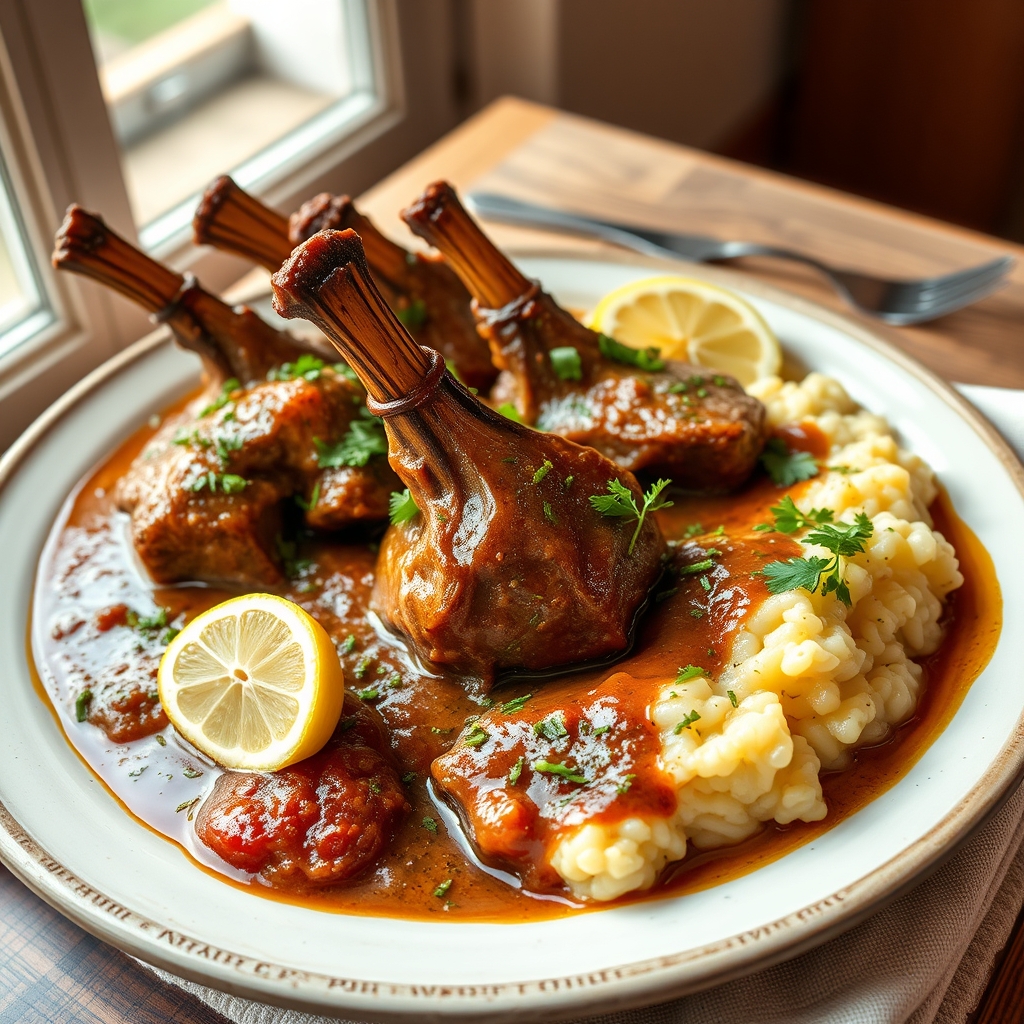
About this recipe
Braised veal shanks in a rich Milanese sauce
Ingredients
- 4 meaty shanks Veal
- ½ cup Flour
- 2 tablespoons Olive Oil
- 3 tablespoons Butter
- 1 medium chopped into ½-inch pieces Onion
- 1 chopped into ½-inch pieces Carrots
- 1 chopped into ½-inch pieces Celery
- 1 bulb chopped into ½-inch pieces Fennel
- 3 cloves Garlic
- 2 strips Orange Zest
- 1 ½ teaspoons Marjoram
- 1 Bay Leaf
- 1 cup Dry White Wine
- ½ cup Chicken Stock
- 1 cup chopped with juice Tomatoes
- 2 tablespoons chopped Parsley
- 1 teaspoon minced Garlic
- 1 teaspoon grated Lemon Zest
Quantities recalculate automatically when you change the serving size.
Method
To begin, preheat your oven to 300 degrees, which will provide the perfect temperature for slow-cooking the veal shanks.
Next, prepare the veal shanks by seasoning them with salt and pepper, then dredging them in flour to create a crispy exterior.
Heat the oil and butter in a large Dutch oven or braising pot over medium-high heat, then add the veal shanks and brown them on both sides until they are crispy and golden brown.
Remove the veal shanks from the pot and set them aside, then add the remaining butter and melt it over medium heat. Add the onion, carrot, celery, and fennel, and cook until they are softened and fragrant.
Add the garlic, orange zest, marjoram, and bay leaf to the pot, and cook for an additional minute, stirring constantly to prevent the ingredients from burning.
Add the white wine to the pot and bring it to a boil, scraping up any browned bits from the bottom of the pot. Reduce the wine by half, then add the chicken stock and tomatoes, and bring the mixture to a boil. Reduce the liquid to about 1 cup, then add the veal shanks back to the pot.
Cover the pot with parchment paper and a lid, then transfer it to the preheated oven and braise the veal shanks for 2 hours, or until they are tender and falling off the bone.
While the veal shanks are braising, prepare the gremolata by mixing together the garlic, parsley, and lemon zest in a small bowl. Cover the bowl with plastic wrap and set it aside until you're ready to serve.
After 2 hours, remove the pot from the oven and sprinkle the gremolata over the top of the veal shanks. Return the pot to the oven and cook for an additional 15 minutes, or until the gremolata is crispy and golden brown.
Remove the veal shanks from the pot and place them on a serving platter or individual plates. Cover the veal shanks with foil to keep them warm, then strain the sauce and discard any excess fat.
Bring the sauce to a boil and reduce it to the desired consistency, then season it with salt and pepper to taste. Serve the sauce over the veal shanks, garnished with additional gremolata and parsley if desired.
To serve, place a veal shank on each plate, then spoon the sauce over the top. Garnish with additional gremolata and parsley, and serve immediately.
Cooking tips
- Use high-quality ingredients, including fresh and flavorful vegetables, good quality white wine, and tender and juicy veal shanks.
- Make sure to cook the veal shanks for at least two hours, or until they are tender and falling off the bone.
- Don't rush the cooking process, as the slow and gentle cooking of the veal shanks is what makes the dish so tender and flavorful.
- Use a large and heavy Dutch oven or braising pot to cook the veal shanks, as it allows for even heat distribution and helps to prevent the sauce from burning or sticking to the bottom of the pot.
- Prepare the gremolata ahead of time and store it in the refrigerator until you're ready to serve.
- Don't overcook the sauce, as it can become too thick and sticky. Instead, cook it until it reaches the desired consistency, then season it with salt and pepper to taste.
Substitutions
- You can substitute beef or pork shanks for the veal shanks, although the flavor and texture will be slightly different.
- You can use red wine instead of white wine, although it will give the sauce a slightly different flavor profile.
- You can omit the orange zest and marjoram if you don't have them on hand, although they do add a unique and delicious flavor to the dish.
- You can use chicken or beef broth instead of chicken stock, although it will change the flavor of the sauce slightly.
Storage & make-ahead
To store Osso Buco alla Milanese, let it cool to room temperature, then cover it and refrigerate it for up to 3 days. To reheat, simply warm the dish over low heat, or reheat it in the oven at 300 degrees for 20-30 minutes, or until the veal shanks are warmed through. You can also freeze the dish for up to 2 months, then thaw and reheat it when you're ready to serve.
Recipe notes
One of the key elements that sets Osso Buco alla Milanese apart from other braised dishes is the use of veal shanks, which are prized for their tender and flavorful meat. The slow-cooking process breaks down the connective tissues in the meat, rendering it tender and juicy, while the sauce adds a rich and depthful flavor profile that complements the veal perfectly. This dish is traditionally served with risotto, which helps to soak up the flavorful sauce, but it can also be served with polenta or roasted vegetables for a delicious and satisfying meal. When making Osso Buco alla Milanese, it's essential to use high-quality ingredients, including fresh and flavorful vegetables, good quality white wine, and of course, tender and juicy veal shanks. The dish can be made ahead of time, which makes it perfect for special occasions or dinner parties, and it can also be scaled up or down depending on the number of guests. In terms of equipment, a large and heavy Dutch oven or braising pot is essential for cooking the veal shanks, as it allows for even heat distribution and helps to prevent the sauce from burning or sticking to the bottom of the pot. One of the most common mistakes that people make when cooking Osso Buco alla Milanese is not cooking the veal shanks for long enough, which can result in tough and chewy meat. To avoid this, it's essential to cook the veal shanks for at least two hours, or until they are tender and falling off the bone. Another important aspect of this dish is the gremolata, a condiment made from lemon zest, garlic, and parsley, which adds a bright and citrusy flavor to the dish. The gremolata is typically served on the side, allowing each guest to sprinkle it over their veal shanks as desired. This adds a fun and interactive element to the dish, and allows each guest to customize their meal to their taste. In addition to the gremolata, the dish can also be garnished with fresh parsley or lemon wedges, which adds a pop of color and freshness to the plate. When it comes to scaling up or down, Osso Buco alla Milanese is a relatively flexible recipe, and can be easily adapted to feed a large or small crowd. The key is to adjust the amount of ingredients accordingly, and to make sure that the veal shanks are cooked for the correct amount of time. It's also important to note that the dish can be made in advance, which makes it perfect for special occasions or dinner parties. Simply cook the veal shanks and sauce ahead of time, then reheat them when you're ready to serve. In terms of equipment, a large and heavy Dutch oven or braising pot is essential for cooking the veal shanks, as it allows for even heat distribution and helps to prevent the sauce from burning or sticking to the bottom of the pot. A slotted spatula or spoon is also useful for removing the veal shanks from the pot, and for serving them to your guests. Finally, one of the most important things to keep in mind when cooking Osso Buco alla Milanese is to be patient and to not rush the cooking process. The slow and gentle cooking of the veal shanks is what makes the dish so tender and flavorful, so it's essential to allow the dish to cook for the full two hours. With a little patience and practice, you'll be able to create a truly unforgettable Osso Buco alla Milanese that is sure to impress your friends and family.
Frequently asked questions
What is Osso Buco alla Milanese?
Osso Buco alla Milanese is a traditional Italian dish made with braised veal shanks, white wine, and vegetables.
How do I cook the veal shanks?
To cook the veal shanks, brown them in a large Dutch oven or braising pot, then braise them in the oven for 2 hours, or until they are tender and falling off the bone.
What is gremolata?
Gremolata is a condiment made from lemon zest, garlic, and parsley, which is traditionally served with Osso Buco alla Milanese.
Can I make Osso Buco alla Milanese ahead of time?
Yes, you can make Osso Buco alla Milanese ahead of time. Simply cook the veal shanks and sauce, then let them cool to room temperature. Cover and refrigerate the dish for up to 3 days, or freeze it for up to 2 months.
How do I serve Osso Buco alla Milanese?
To serve Osso Buco alla Milanese, place a veal shank on each plate, then spoon the sauce over the top. Garnish with additional gremolata and parsley, and serve immediately.
Recipe source: TheMealDBEditorial text, photography and testing notes by LAODH.
Keep cooking
You might also like
Osso Buco alla Milanese
Braised veal shanks in a rich Milanese sauce
Osso Buco alla Milanese
Braised veal shanks in a rich Milanese sauce
Osso Buco alla Milanese
Braised veal shanks in a rich Milanese sauce
Osso Buco alla Milanese
Braised veal shanks in a rich Milanese sauce
Osso Buco alla Milanese
Braised veal shanks in a rich Milanese sauce
Osso Buco alla Milanese
Braised veal shanks in a rich Milanese sauce
Osso Buco alla Milanese
Braised veal shanks in a rich Milanese sauce
Osso Buco alla Milanese
Braised veal shanks in a rich Milanese sauce
Osso Buco alla Milanese
Braised veal shanks in a rich Milanese sauce
Osso Buco alla Milanese
Braised veal shanks in a rich Milanese sauce
Osso Buco alla Milanese
Braised veal shanks in a rich Milanese sauce
Asian Glazed Drumsticks
Sticky Asian glaze on chicken drumsticks
Osso Buco alla Milanese
Braised veal shanks in a rich Milanese sauce
Osso Buco alla Milanese
Braised veal shanks in a rich Milanese sauce
Osso Buco alla Milanese
Braised veal shanks in a rich Milanese sauce
Osso Buco alla Milanese
Braised veal shanks in a rich Milanese sauce
Osso Buco alla Milanese
Braised veal shanks in a rich Milanese sauce
Osso Buco alla Milanese
Braised veal shanks in a rich Milanese sauce
Osso Buco alla Milanese
Braised veal shanks in a rich Milanese sauce
Osso Buco alla Milanese
Braised veal shanks in a rich Milanese sauce
Osso Buco alla Milanese
Braised veal shanks in a rich Milanese sauce
Osso Buco alla Milanese
Braised veal shanks in a rich Milanese sauce
Osso Buco alla Milanese
Braised veal shanks in a rich Milanese sauce
Osso Buco alla Milanese
Braised veal shanks in a rich Milanese sauce
Osso Buco alla Milanese
Braised veal shanks in a rich Milanese sauce
Osso Buco alla Milanese
Braised veal shanks in a rich Milanese sauce
Osso Buco alla Milanese
Braised veal shanks in a rich Milanese sauce
Osso Buco alla Milanese
Braised veal shanks in a rich Milanese sauce
Osso Buco alla Milanese
Braised veal shanks in a rich Milanese sauce
Osso Buco alla Milanese
Braised veal shanks in a rich Milanese sauce
Osso Buco alla Milanese
Braised veal shanks in a rich Milanese sauce
Osso Buco alla Milanese
Braised veal shanks in a rich Milanese sauce
Osso Buco alla Milanese
Braised veal shanks in a rich Milanese sauce
Osso Buco alla Milanese
Braised veal shanks in a rich Milanese sauce
Osso Buco alla Milanese
Braised veal shanks in a rich Milanese sauce
Osso Buco alla Milanese
Braised veal shanks in a rich Milanese sauce
Osso Buco alla Milanese
Braised veal shanks in a rich Milanese sauce
Osso Buco alla Milanese
Braised veal shanks in a rich Milanese sauce
Osso Buco alla Milanese
Braised veal shanks in a rich Milanese sauce
Osso Buco alla Milanese
Braised veal shanks in a rich Milanese sauce
Osso Buco alla Milanese
Braised veal shanks in a rich Milanese sauce
Osso Buco alla Milanese
Braised veal shanks in a rich Milanese sauce
Osso Buco alla Milanese
Braised veal shanks in a rich Milanese sauce
Osso Buco alla Milanese
Braised veal shanks in a rich Milanese sauce
Osso Buco alla Milanese
Braised veal shanks in a rich Milanese sauce
Osso Buco alla Milanese
Braised veal shanks in a rich Milanese sauce
Osso Buco alla Milanese
Braised veal shanks in a rich Milanese sauce
Osso Buco alla Milanese
Braised veal shanks in a rich Milanese sauce