
Orange Chicken
Orange Chicken is a dish that embodies the vibrant flavors and techniques of Asian cuisine, with its perfect balance of sweet, sour, and savory notes. This popular dish has gained a loyal following worldwide, and its appeal lies in the combination of crispy fried chicken, a rich and velvety sauce, and the subtle nuances of ginger, garlic, and scallions. The key to its success lies in the harmony of textures and flavors, which is achieved through a series of carefully crafted steps. From the initial marination to the final sauce-coating, each component plays a crucial role in creating a dish that is both familiar and exciting. Whether you're a seasoned cook or a culinary newcomer, Orange Chicken is a recipe that promises to delight and inspire, with its ease of preparation and impressive presentation.
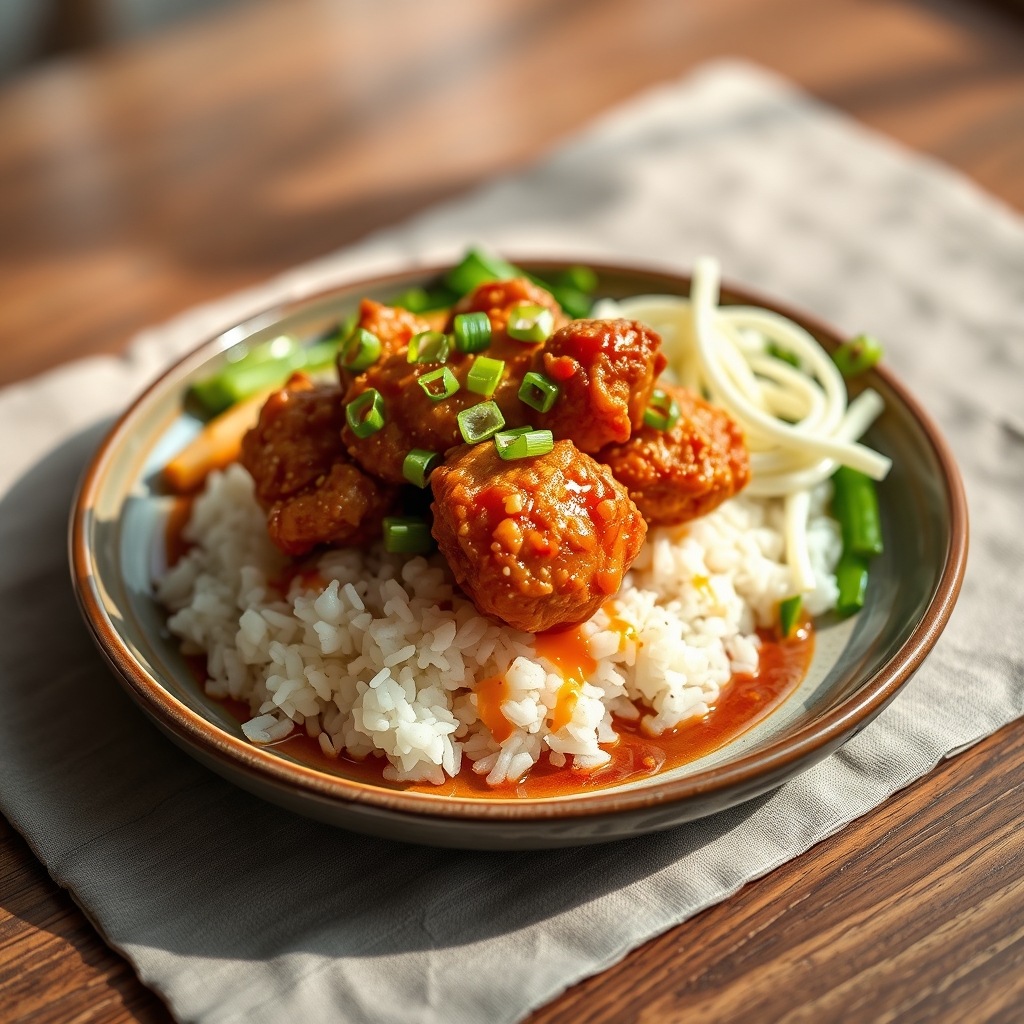
About this recipe
Crispy fried chicken in a sweet and sour orange sauce
Ingredients
- 1 egg
- 1 tbsp soy sauce
- 0.5 tsp brown sugar
- 1.5 lb chicken thigh (boneless, skinless, cut into 1-in (2.5-cm) pieces)
- 0.25 cup soy sauce
- 0.5 cup brown sugar
- 0.25 cup white vinegar
- 0.25 cup orange juice
- 1 cup chicken broth
- 2 tbsp cornstarch
- 1.5 tsp sesame oil
- 0.75 tsp red pepper flakes
- 1 cup cornstarch
- 0.33 cup all-purpose flour
- 0.25 tsp baking soda
- vegetable oil
- 1 tbsp ginger (minced)
- 3 clove garlic (minced)
- 4 scallion (thinly sliced, white and green parts separated)
- rice
Quantities recalculate automatically when you change the serving size.
Method
To begin, prepare the marinade by whisking together the egg, soy sauce, and brown sugar in a large bowl. Add the chicken to the bowl and toss until the pieces are evenly coated, then let it marinate at room temperature for 30 minutes.
While the chicken is marinating, prepare the sauce by combining the soy sauce, brown sugar, white vinegar, orange juice, chicken broth, cornstarch, sesame oil, and red pepper flakes in a small bowl. Mix well to combine, then set the sauce aside.
In a medium bowl, whisk together the cornstarch, flour, and baking soda. Sprinkle this mixture over the marinated chicken and toss until each piece is coated with a dry, clumpy texture.
Heat about 1/4 inch of vegetable oil in a large nonstick skillet over medium-high heat until it reaches 350°F. Fry the coated chicken in batches, being careful not to overcrowd the pan, until it's golden brown and crispy, about 4-5 minutes per batch. Drain the chicken on paper towels.
Finally, carefully drain the oil from the skillet and wipe it clean with a paper towel. Add a small amount of oil to the pan, then sauté the minced ginger, garlic, and scallion whites over medium heat until fragrant, about 30 seconds. Add the prepared sauce to the pan and bring it to a boil, cooking until it thickens and becomes glossy, about 2-3 minutes. Add the fried chicken to the pan and toss until it's fully coated in the sauce, then sprinkle with thinly sliced scallions and serve over steamed rice.
Cooking tips
- Use a thermometer to ensure the oil reaches the correct temperature for frying.
- Don't overcrowd the pan when frying the chicken, as this can lower the oil temperature and result in greasy or undercooked chicken.
- Adjust the amount of sugar and vinegar in the sauce to taste, depending on your personal preference for sweetness and acidity.
- Use a nonstick skillet to prevent the chicken from sticking and to make cleanup easier.
- Don't overcook the chicken, as this can result in dry and tough meat.
- Let the chicken marinate for the full 30 minutes to ensure it's evenly coated and flavorful.
- Use a high-quality vegetable oil with a high smoke point for frying, such as peanut or avocado oil.
- Don't skip the step of cooking the sauce, as this is what gives the dish its rich and velvety texture.
Substitutions
- Use tamari or coconut aminos instead of soy sauce for a gluten-free option.
- Replace the brown sugar with honey or maple syrup for a slightly different flavor.
- Use chicken breast instead of thighs for a leaner protein option.
- Add some diced bell peppers or carrots to the sauce for extra flavor and nutrition.
- Use rice vinegar instead of white vinegar for a slightly sweeter flavor.
Storage & make-ahead
To store Orange Chicken, let it cool to room temperature, then refrigerate or freeze it. To reheat, simply microwave or stir-fry the chicken until it's warmed through. You can also reheat the sauce separately and serve it over the chicken. When refrigerating or freezing, be sure to store the chicken and sauce in separate containers to prevent the sauce from becoming watery.
Nutrition
Per serving. Nutritional values are estimates and provided for guidance only.
Recipe notes
One of the reasons Orange Chicken works so well is the way it balances contrasting flavors and textures. The crispy exterior of the fried chicken provides a satisfying crunch, while the tender interior remains juicy and flavorful. The sauce, with its combination of soy sauce, sugar, vinegar, and orange juice, adds a depth and complexity that elevates the dish to new heights. To serve, steamed rice is the perfect accompaniment, as it helps to soak up the rich and savory sauce. For those looking to make the dish ahead, it's possible to prepare the sauce and marinate the chicken in advance, although the frying and sauce-coating should be done just before serving. When it comes to scaling the recipe up or down, the key is to maintain the balance of flavors and textures, so be sure to adjust the ingredient quantities accordingly. In terms of equipment, a large nonstick skillet is essential for frying the chicken, as it allows for even cooking and prevents the chicken from sticking. Perhaps the most common mistake people make when cooking Orange Chicken is overcooking the chicken, which can lead to dry and tough meat. To avoid this, be sure to cook the chicken in batches and adjust the heat as needed, so that it remains crispy on the outside and juicy on the inside. When making Orange Chicken, it's also important to consider the type of oil used for frying, as it can affect the flavor and texture of the dish. Vegetable oil is a good choice, as it has a high smoke point and a neutral flavor that won't overpower the other ingredients. In addition, be sure to not overcrowd the pan, as this can lower the oil temperature and result in greasy or undercooked chicken. By following these tips and techniques, you'll be able to create a delicious and authentic Orange Chicken dish that's sure to impress your family and friends. The dish is also versatile, and can be served with a variety of sides, such as stir-fried vegetables or egg rolls. With its ease of preparation and impressive presentation, Orange Chicken is a recipe that's perfect for any occasion, whether it's a weeknight dinner or a special celebration. Another key aspect of Orange Chicken is the sauce, which is a critical component of the dish. The sauce should be thick and velvety, with a deep orange color and a rich, savory flavor. To achieve this, be sure to cook the sauce for the full 2-3 minutes, stirring constantly, until it reaches the desired consistency. You can also adjust the amount of sugar and vinegar to taste, depending on your personal preference for sweetness and acidity. By perfecting the sauce, you'll be able to take your Orange Chicken to the next level, and create a dish that's truly unforgettable.
Frequently asked questions
What type of oil is best for frying the chicken?
A high-quality vegetable oil with a high smoke point, such as peanut or avocado oil, is best for frying the chicken.
Can I use chicken breast instead of thighs?
Yes, you can use chicken breast instead of thighs, but keep in mind that it may be slightly leaner and less juicy.
How do I prevent the chicken from becoming greasy?
To prevent the chicken from becoming greasy, be sure to not overcrowd the pan and to drain the chicken on paper towels after frying.
Can I make the sauce ahead of time?
Yes, you can make the sauce ahead of time and store it in the refrigerator for up to a day. Simply reheat it before serving.
What is the best way to serve Orange Chicken?
The best way to serve Orange Chicken is over steamed rice, with some stir-fried vegetables or egg rolls on the side.
Recipe source: TinyPlatesEditorial text, photography and testing notes by LAODH.
Keep cooking
You might also like
Orange Chicken
Crispy fried chicken in a sweet and sour orange sauce
Orange Chicken
Crispy fried chicken in a sweet and sour orange sauce
Orange Chicken
Crispy fried chicken in a sweet and sour orange sauce
Orange Chicken
Crispy fried chicken in a sweet and sour orange sauce
Orange Chicken
Crispy fried chicken in a sweet and sour orange sauce
Orange Chicken
Crispy fried chicken in a sweet and sour orange sauce
Orange Chicken
Crispy fried chicken in a sweet and sour orange sauce
Orange Chicken
Crispy fried chicken in a sweet and sour orange sauce
Orange Chicken
Crispy fried chicken in a sweet and sour orange sauce
Orange Chicken
Crispy fried chicken in a sweet and sour orange sauce
Orange Chicken
Crispy fried chicken in a sweet and sour orange sauce
Kung Pao Chicken
Spicy Chinese chicken dish
Orange Chicken
Crispy fried chicken in a sweet and sour orange sauce
Orange Chicken
Crispy fried chicken in a sweet and sour orange sauce
Orange Chicken
Crispy fried chicken in a sweet and sour orange sauce
Orange Chicken
Crispy fried chicken in a sweet and sour orange sauce
Orange Chicken
Crispy fried chicken in a sweet and sour orange sauce
Orange Chicken
Crispy fried chicken in a sweet and sour orange sauce
Orange Chicken
Crispy fried chicken in a sweet and sour orange sauce
Orange Chicken
Crispy fried chicken in a sweet and sour orange sauce
Orange Chicken
Crispy fried chicken in a sweet and sour orange sauce
Orange Chicken
Crispy fried chicken in a sweet and sour orange sauce
Orange Chicken
Crispy fried chicken in a sweet and sour orange sauce
Orange Chicken
Crispy fried chicken in a sweet and sour orange sauce
Orange Chicken
Crispy fried chicken in a sweet and sour orange sauce
Orange Chicken
Crispy fried chicken in a sweet and sour orange sauce
Orange Chicken
Crispy fried chicken in a sweet and sour orange sauce
Orange Chicken
Crispy fried chicken in a sweet and sour orange sauce
Orange Chicken
Crispy fried chicken in a sweet and sour orange sauce
Orange Chicken
Crispy fried chicken in a sweet and sour orange sauce
Orange Chicken
Crispy fried chicken in a sweet and sour orange sauce
Orange Chicken
Crispy fried chicken in a sweet and sour orange sauce
Orange Chicken
Crispy fried chicken in a sweet and sour orange sauce
Orange Chicken
Crispy fried chicken in a sweet and sour orange sauce
Orange Chicken
Crispy fried chicken in a sweet and sour orange sauce
Orange Chicken
Crispy fried chicken in a sweet and sour orange sauce
Orange Chicken
Crispy fried chicken in a sweet and sour orange sauce
Orange Chicken
Crispy fried chicken in a sweet and sour orange sauce
Orange Chicken
Crispy fried chicken in a sweet and sour orange sauce
Orange Chicken
Crispy fried chicken in a sweet and sour orange sauce
Orange Chicken
Crispy fried chicken in a sweet and sour orange sauce
Orange Chicken
Crispy fried chicken in a sweet and sour orange sauce
Orange Chicken
Crispy fried chicken in a sweet and sour orange sauce
Orange Chicken
Crispy fried chicken in a sweet and sour orange sauce
Orange Chicken
Crispy fried chicken in a sweet and sour orange sauce
Orange Chicken
Crispy fried chicken in a sweet and sour orange sauce
Orange Chicken
Crispy fried chicken in a sweet and sour orange sauce
Orange Chicken
Crispy fried chicken in a sweet and sour orange sauce