
Mediterranean Sea Bass
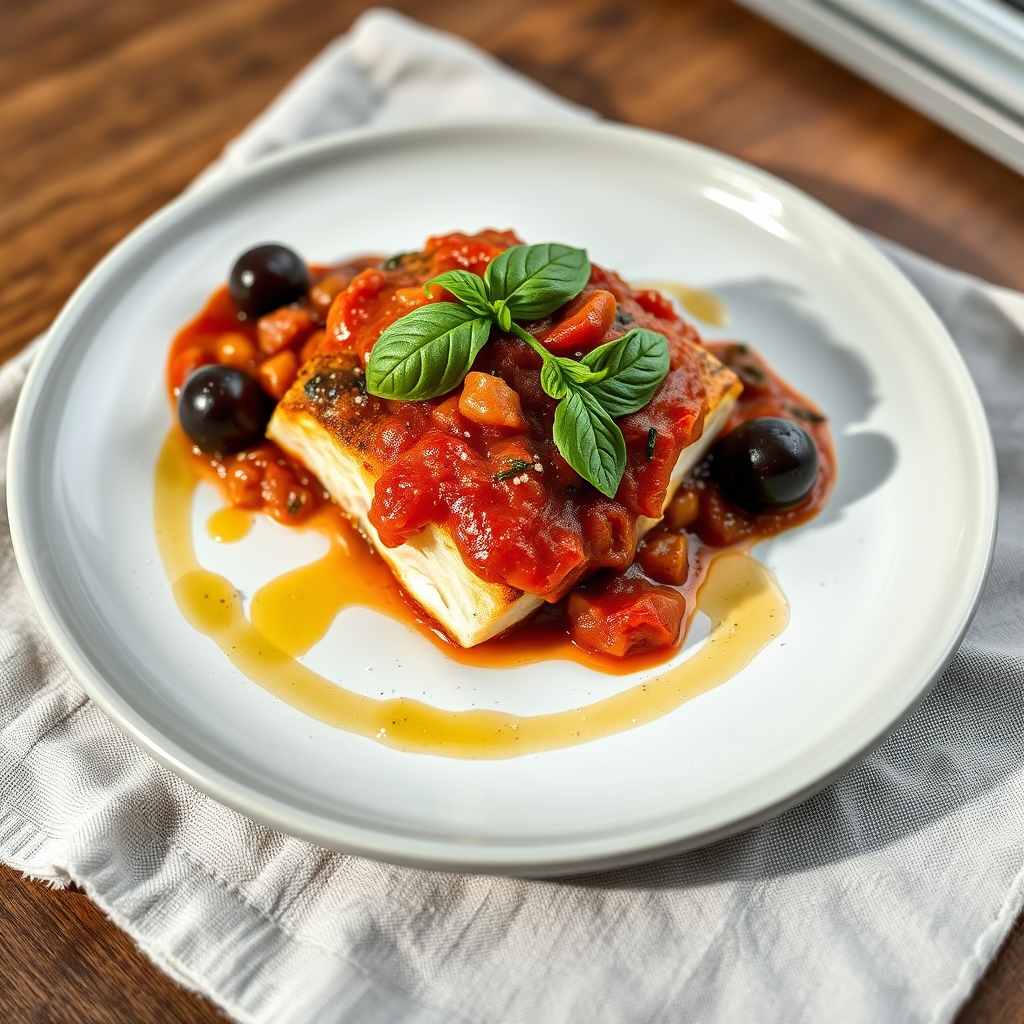
Mediterranean Sea Bass is a dish that embodies the vibrant flavors of the Mediterranean, with its delicate balance of sweet, sour, and savory notes. This American twist on a classic Mediterranean recipe brings together the tender flesh of Chilean sea bass, the brightness of fresh basil, and the depth of Kalamata olives, all tied together with a rich and tangy tomato sauce. The beauty of this dish lies in its simplicity, allowing each ingredient to shine while still creating a cohesive and satisfying whole. As the sea bass cooks to a flaky perfection, the sauce simmers away, reducing to a thick and velvety texture that coats the fish beautifully. With its elegant presentation and impressive flavors, this dish is sure to impress even the most discerning dinner guests. Whether you're looking to impress a crowd or simply want to treat yourself to a special meal, Mediterranean Sea Bass is a recipe that is sure to deliver.
About this recipe
Pan-seared sea bass with Mediterranean tomato sauce
Ingredients
- 1 tbsp olive oil
- 1 cup yellow onion (chopped)
- 3 clove garlic (minced)
- 0.25 tsp red pepper flakes (crushed)
- 0.5 cup fennel (chopped)
- 1 can whole peeled tomato
- 0.75 cup fresh basil (very thinly sliced)
- 0.5 cup white wine (dry)
- 0.25 cup Kalamata olive (pitted, halved)
- kosher salt
- black pepper (freshly ground)
- 4 piece Chilean sea bass fillet (skinless)
- olive oil cooking spray (organic)
- kosher salt
- black pepper (freshly ground)
- 1 tbsp olive oil
Quantities recalculate automatically when you change the serving size.
Method
To begin, position the racks in the middle and upper thirds of the oven and preheat to 425 F, ensuring a consistent heat distribution for even cooking.
Next, heat 1 tablespoon of olive oil in a large skillet over medium heat, allowing it to shimmer before adding the chopped onion, minced garlic, and crushed red pepper flakes, cooking until the mixture is golden and fragrant, stirring occasionally, about 5 minutes.
Add the chopped fennel to the skillet and continue cooking until the vegetables are soft and translucent, an additional 3 to 5 minutes, stirring occasionally to prevent burning.
Reduce the heat to medium and add the canned whole peeled tomatoes with their juices, using the back of a wooden spoon to smash the tomatoes and release their flavors, cooking for 5 minutes to allow the sauce to start reducing.
Stir in the very thinly sliced fresh basil, dry white wine, pitted and halved Kalamata olives, 1 teaspoon of kosher salt, and 1/8 teaspoon of freshly ground black pepper, combining the ingredients to create a rich and tangy sauce.
Reduce the heat to low and simmer the sauce for 15 minutes, or until it has thickened slightly, stirring occasionally to prevent scorching, while preparing the fish for cooking.
Pat the skinless Chilean sea bass fillets dry with paper towels, lightly spray them with organic olive oil cooking spray, and season with kosher salt and freshly ground black pepper to enhance their natural flavors.
In a heavy ovenproof skillet, heat 1 tablespoon of olive oil over high heat until shimmering, then add the fillets, rounded-side down, and cook for 2 minutes to achieve a crispy crust on the outside.
Carefully flip the fillets with a metal spatula and place the skillet in the preheated oven, baking until the fish is no longer translucent, 8 to 10 minutes, depending on the thickness of the fillets.
Switch the oven to broil and position the skillet on the upper rack, broiling until the tops of the fillets are golden brown, 2 to 4 minutes, watching closely to prevent overcooking.
Arrange the cooked fillets on individual plates, spooning the Mediterranean tomato sauce over the top of each fillet, and serve immediately to enjoy the combination of flavors and textures.
Cooking tips
- Use the freshest and highest-quality ingredients available to ensure the best flavor and texture.
- Don't overcook the fish, as it can become dry and tough.
- Let the fish rest for a few minutes before serving to allow the juices to redistribute.
- Use a heavy ovenproof skillet to achieve a crispy crust on the outside of the fish.
- Don't overcrowd the skillet when cooking the fish, as this can prevent even cooking.
- Stir the sauce occasionally while it's simmering to prevent scorching.
- Taste and adjust the seasoning of the sauce as needed before serving.
- Use a good quality olive oil for the best flavor.
Substitutions
- Replace the Kalamata olives with green olives for a different flavor profile.
- Use fresh tomatoes instead of canned for a more intense tomato flavor.
- Substitute the basil with oregano for a slightly different herbal flavor.
- Replace the white wine with chicken or vegetable broth for a non-alcoholic option.
- Use a different type of fish, such as cod or halibut, for a different texture and flavor.
Storage & make-ahead
The sauce can be stored in the refrigerator for up to 3 days or frozen for up to 3 months. The cooked fish can be stored in the refrigerator for up to 1 day. To reheat, simply warm the sauce over low heat and serve with the cooked fish.
Nutrition
Per serving. Nutritional values are estimates and provided for guidance only.
Recipe notes
The key to this dish is the balance of flavors in the sauce, which is achieved by cooking the onions, garlic, and fennel until they are soft and translucent, then adding the tomatoes, basil, and olives. This allows the sweetness of the onions and the brightness of the basil to shine through, while the olives add a salty depth to the sauce. The sea bass itself is cooked to a perfect flakiness, with a crispy crust on the outside giving way to tender flesh within. To serve, simply spoon the sauce over the top of the fish and garnish with additional basil and olives if desired. This dish is perfect for a special occasion or a dinner party, and can be made ahead of time by preparing the sauce and storing it in the refrigerator until ready to cook the fish. The sauce can also be scaled up or down depending on the number of guests, and can be served with a variety of sides, such as roasted vegetables or a simple green salad. One thing to note is that the quality of the ingredients is crucial to the success of this dish, so be sure to use the freshest and highest-quality ingredients available. In terms of equipment, a heavy ovenproof skillet is essential for cooking the fish, as it allows for a crispy crust to form on the outside while keeping the inside tender. Many people make the mistake of overcooking the fish, which can result in a dry and tough texture. To avoid this, be sure to cook the fish until it is just opaque and flakes easily with a fork. When making this dish ahead of time, it's best to prepare the sauce and store it in the refrigerator until ready to cook the fish. This allows the flavors to meld together and the sauce to thicken, resulting in a more complex and satisfying flavor profile. The sauce can also be frozen for up to 3 months, making it a great option for meal prep or planning ahead. In terms of scaling up or down, the sauce can be easily doubled or tripled to feed a larger crowd, and can also be halved to feed a smaller group. The fish can also be cooked in batches if necessary, making it a great option for a large dinner party. The equipment that matters most in this recipe is the heavy ovenproof skillet, which allows for a crispy crust to form on the outside of the fish while keeping the inside tender. A good quality skillet can make all the difference in the success of this dish, so be sure to invest in a high-quality option. Finally, the one thing that most people get wrong when making this dish is the cooking time for the fish. Many people overcook the fish, resulting in a dry and tough texture. To avoid this, be sure to cook the fish until it is just opaque and flakes easily with a fork, then remove it from the heat and let it rest for a few minutes before serving.
Frequently asked questions
What type of fish is best for this recipe?
Chilean sea bass is the recommended fish for this recipe, but other types of fish such as cod or halibut can also be used.
Can I make the sauce ahead of time?
Yes, the sauce can be made ahead of time and stored in the refrigerator for up to 3 days or frozen for up to 3 months.
How do I prevent the fish from overcooking?
To prevent the fish from overcooking, cook it until it is just opaque and flakes easily with a fork, then remove it from the heat and let it rest for a few minutes before serving.
Can I substitute the Kalamata olives with green olives?
Yes, you can substitute the Kalamata olives with green olives for a different flavor profile.
How do I reheat the sauce?
To reheat the sauce, simply warm it over low heat, stirring occasionally, until it is heated through.
Recipe source: TinyPlatesEditorial text, photography and testing notes by LAODH.
Keep cooking
You might also like
Mediterranean Sea Bass
Pan-seared sea bass with Mediterranean tomato sauce
Mediterranean Sea Bass
Pan-seared sea bass with Mediterranean tomato sauce
Mediterranean Sea Bass
Pan-seared sea bass with Mediterranean tomato sauce
Mediterranean Sea Bass
Pan-seared sea bass with Mediterranean tomato sauce
Mediterranean Sea Bass
Pan-seared sea bass with Mediterranean tomato sauce
Mediterranean Sea Bass
Pan-seared sea bass with Mediterranean tomato sauce
Mediterranean Sea Bass
Pan-seared sea bass with Mediterranean tomato sauce
Mediterranean Sea Bass
Pan-seared sea bass with Mediterranean tomato sauce
Mediterranean Sea Bass
Pan-seared sea bass with Mediterranean tomato sauce
Mediterranean Sea Bass
Pan-seared sea bass with Mediterranean tomato sauce
Mediterranean Sea Bass
Pan-seared sea bass with Mediterranean tomato sauce
Chicken Alfredo Primavera
Italian chicken and pasta dish
Mediterranean Sea Bass
Pan-seared sea bass with Mediterranean tomato sauce
Mediterranean Sea Bass
Pan-seared sea bass with Mediterranean tomato sauce
Mediterranean Sea Bass
Pan-seared sea bass with Mediterranean tomato sauce
Mediterranean Sea Bass
Pan-seared sea bass with Mediterranean tomato sauce
Mediterranean Sea Bass
Pan-seared sea bass with Mediterranean tomato sauce
Mediterranean Sea Bass
Pan-seared sea bass with Mediterranean tomato sauce
Mediterranean Sea Bass
Pan-seared sea bass with Mediterranean tomato sauce
Mediterranean Sea Bass
Pan-seared sea bass with Mediterranean tomato sauce
Mediterranean Sea Bass
Pan-seared sea bass with Mediterranean tomato sauce
Mediterranean Sea Bass
Pan-seared sea bass with Mediterranean tomato sauce
Mediterranean Sea Bass
Pan-seared sea bass with Mediterranean tomato sauce
Mediterranean Sea Bass
Pan-seared sea bass with Mediterranean tomato sauce
Mediterranean Sea Bass
Pan-seared sea bass with Mediterranean tomato sauce
Mediterranean Sea Bass
Pan-seared sea bass with Mediterranean tomato sauce
Mediterranean Sea Bass
Pan-seared sea bass with Mediterranean tomato sauce
Mediterranean Sea Bass
Pan-seared sea bass with Mediterranean tomato sauce
Mediterranean Sea Bass
Pan-seared sea bass with Mediterranean tomato sauce
Mediterranean Sea Bass
Pan-seared sea bass with Mediterranean tomato sauce
Mediterranean Sea Bass
Pan-seared sea bass with Mediterranean tomato sauce
Mediterranean Sea Bass
Pan-seared sea bass with Mediterranean tomato sauce
Mediterranean Sea Bass
Pan-seared sea bass with Mediterranean tomato sauce
Mediterranean Sea Bass
Pan-seared sea bass with Mediterranean tomato sauce
Mediterranean Sea Bass
Pan-seared sea bass with Mediterranean tomato sauce
Mediterranean Sea Bass
Pan-seared sea bass with Mediterranean tomato sauce
Mediterranean Sea Bass
Pan-seared sea bass with Mediterranean tomato sauce
Mediterranean Sea Bass
Pan-seared sea bass with Mediterranean tomato sauce
Mediterranean Sea Bass
Pan-seared sea bass with Mediterranean tomato sauce
Mediterranean Sea Bass
Pan-seared sea bass with Mediterranean tomato sauce
Mediterranean Sea Bass
Pan-seared sea bass with Mediterranean tomato sauce
Mediterranean Sea Bass
Pan-seared sea bass with Mediterranean tomato sauce
Mediterranean Sea Bass
Pan-seared sea bass with Mediterranean tomato sauce
Mediterranean Sea Bass
Pan-seared sea bass with Mediterranean tomato sauce
Mediterranean Sea Bass
Pan-seared sea bass with Mediterranean tomato sauce
Mediterranean Sea Bass
Pan-seared sea bass with Mediterranean tomato sauce
Mediterranean Sea Bass
Pan-seared sea bass with Mediterranean tomato sauce
Mediterranean Sea Bass
Pan-seared sea bass with Mediterranean tomato sauce