
Clam chowder
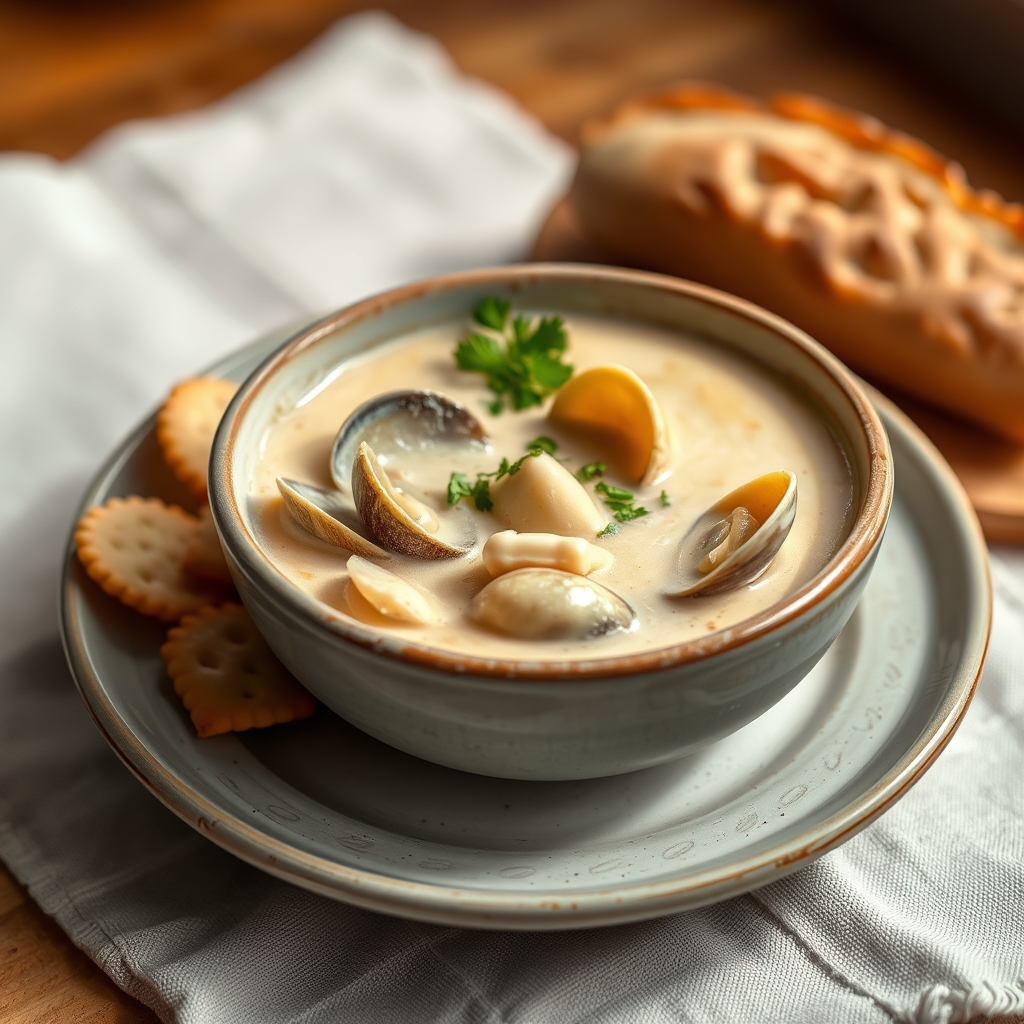
Clam chowder is a quintessential American dish that has been warming hearts and bellies for generations, its rich, creamy broth and tender clams a perfect comfort food for any time of year. This recipe, which serves 4, is a masterclass in balance and restraint, allowing the natural sweetness of the clams to shine through while still delivering a deep, satisfying flavor. With its relatively short cooking time of 10 minutes and minimal hands-on time, it's an ideal option for a quick and easy meal that's sure to impress. The combination of clams, bacon, potatoes, and cream creates a deliciously indulgent flavor profile that's both familiar and exciting, making it a great choice for a special occasion or a cozy night in. Whether you're a seafood lover or just looking for a new recipe to try, this clam chowder is sure to become a favorite.
About this recipe
Creamy clam chowder
Ingredients
- 1½ kg Clams
- 50 g Butter
- 150 g Bacon
- 1 finely chopped Onion
- Thyme (sprigs of fresh)
- 1 Bay Leaf
- 1 tbls Plain Flour
- 150 ml Milk
- 150 ml Double Cream
- 2 medium Potatoes
- Parsley (Chopped)
Quantities recalculate automatically when you change the serving size.
Method
Begin by rinsing the clams in several changes of cold water, then drain them well and tip them into a large pan with 500ml of water. Cover the pan, bring the water to a boil, and simmer for 2 minutes, or until the clams have just opened. Remove the pan from the heat and tip the contents into a colander set over a bowl, catching the clam stock in the bowl. Let the clams cool, then remove them from their shells, reserving a handful of empty shells for presentation if desired. Strain the clam stock into a jug, discarding any grit that remains in the bowl - you should have around 800ml of stock.
Next, heat the butter in the same pan and sizzle the bacon for 3-4 minutes, or until it starts to brown. Stir in the onion, thyme, and bay leaf, and cook everything gently for 10 minutes, or until the onion is soft and golden. Scatter the flour over the top and stir it in to make a sandy paste, cooking for 2 minutes more. Gradually stir in the clam stock, then the milk and cream, whisking constantly to avoid lumps.
Finally, add the diced potatoes to the pan and bring everything to a simmer. Let the mixture cook gently for 10 minutes, or until the potatoes are cooked through. Use a fork to crush a few of the potato chunks against the side of the pan, helping to thicken the broth. Stir through the cooked clam meat and any reserved clam shells, and simmer for a minute to reheat. Season the chowder with plenty of black pepper and a little salt, if needed, then stir through the chopped parsley just before serving.
Cooking tips
- Use fresh clams for the best flavor and texture.
- Don't over-cook the clams, as this can make them tough and rubbery.
- Stir the flour into the butter and bacon fat to make a sandy paste, which will help thicken the broth.
- Whisk constantly when adding the clam stock, milk, and cream to avoid lumps.
- Use a large pan with a heavy bottom to cook the clams and simmer the broth.
- Don't be afraid to experiment with different ingredients and flavor combinations to make the recipe your own.
- Let the chowder cool completely before refrigerating or freezing, as this will help preserve the flavor and texture.
- Reheat the chowder gently, whisking constantly, to prevent scorching or separating.
Substitutions
- Use canned clams as a substitute for fresh clams, but be aware that the flavor and texture may be slightly different.
- Replace the bacon with pancetta or salt pork for a different flavor profile.
- Use chicken or vegetable broth as a substitute for the clam stock, but be aware that the flavor may be less intense.
- Replace the heavy cream with half-and-half or whole milk for a lighter version of the recipe.
- Use dried thyme instead of fresh, but be aware that the flavor may be less potent.
- Replace the potatoes with other starchy vegetables, such as carrots or parsnips, for a different texture and flavor.
Storage & make-ahead
Let the chowder cool completely, then refrigerate or freeze it for later use. Reheat the chowder gently, whisking constantly, to prevent scorching or separating. If refrigerating, use within 3 days. If freezing, use within 3 months.
Recipe notes
One of the key factors that sets this clam chowder apart from others is the use of fresh clams, which adds a level of brightness and depth to the dish that's hard to replicate with canned or frozen alternatives. The addition of bacon and thyme also helps to elevate the flavor, adding a smoky, savory element that complements the clams perfectly. When it comes to serving, clam chowder is incredibly versatile - it can be ladled into bowls and served with a side of crusty bread, or used as a filling for hollowed-out rolls. For a more substantial meal, try pairing it with a simple green salad or a side of roasted vegetables. If you're looking to make the dish ahead of time, it's best to prepare the clam stock and cook the clams, then refrigerate or freeze them until you're ready to finish the recipe. This will help preserve the delicate flavor and texture of the clams. To scale the recipe up or down, simply adjust the ingredient quantities accordingly - just be sure to keep an eye on the cooking time, as larger or smaller batches may take more or less time to cook. In terms of equipment, a large pan with a heavy bottom is essential for cooking the clams and simmering the broth, as it helps to distribute the heat evenly and prevent scorching. Many people make the mistake of over-cooking the clams, which can make them tough and rubbery - to avoid this, be sure to cook them until they're just opened, then remove them from the heat and let them cool. Another important aspect of this recipe is the type of potatoes used - medium-sized potatoes with a high starch content, such as Russet or Idaho, work best, as they'll help to thicken the broth and add a nice texture to the dish. If you can't find these types of potatoes, you can substitute with other varieties, but be aware that the flavor and texture may be slightly different. In addition to the ingredients and equipment, the cooking technique is also crucial in making a great clam chowder. It's essential to cook the clams gently and patiently, allowing them to release their juices and flavor into the broth. This will help to create a rich, creamy sauce that's full of depth and character. To take this recipe to the next level, try adding some other ingredients to the broth, such as diced carrots or celery, or a splash of white wine. These will add a new dimension of flavor to the dish and help to enhance the overall taste experience. Finally, when it comes to serving and presentation, don't be afraid to get creative - a sprinkle of chopped parsley or a dollop of sour cream can add a nice touch of color and flavor to the dish, while a side of crusty bread or oyster crackers can provide a satisfying textural contrast.
Frequently asked questions
What type of clams are best for this recipe?
Fresh clams are best, but canned clams can be used as a substitute.
Can I make this recipe ahead of time?
Yes, you can prepare the clam stock and cook the clams ahead of time, then refrigerate or freeze them until you're ready to finish the recipe.
How do I prevent the clams from becoming tough and rubbery?
Don't over-cook the clams - cook them until they're just opened, then remove them from the heat and let them cool.
Can I use a different type of milk or cream?
Yes, you can use half-and-half or whole milk as a substitute for the heavy cream, but be aware that the flavor and texture may be slightly different.
How do I reheat the chowder without scorching or separating it?
Reheat the chowder gently, whisking constantly, to prevent scorching or separating.
Recipe source: TheMealDBEditorial text, photography and testing notes by LAODH.
Keep cooking
You might also like
Clam chowder
Creamy clam chowder
Clam chowder
Creamy clam chowder
Clam chowder
Creamy clam chowder
Clam chowder
Creamy clam chowder
Clam chowder
Creamy clam chowder
Clam chowder
Creamy clam chowder
Clam chowder
Creamy clam chowder
Clam chowder
Creamy clam chowder
Clam chowder
Creamy clam chowder
Clam chowder
Creamy clam chowder
Clam chowder
Creamy clam chowder
Shrimp pasta with white wine tomato cream sauce
Shrimp pasta with white wine tomato cream sauce
Clam chowder
Creamy clam chowder
Clam chowder
Creamy clam chowder
Clam chowder
Creamy clam chowder
Clam chowder
Creamy clam chowder
Clam chowder
Creamy clam chowder
Clam chowder
Creamy clam chowder
Clam chowder
Creamy clam chowder
Clam chowder
Creamy clam chowder
Clam chowder
Creamy clam chowder
Clam chowder
Creamy clam chowder
Clam chowder
Creamy clam chowder
Clam chowder
Creamy clam chowder
Clam chowder
Creamy clam chowder
Clam chowder
Creamy clam chowder
Clam chowder
Creamy clam chowder
Clam chowder
Creamy clam chowder
Clam chowder
Creamy clam chowder
Clam chowder
Creamy clam chowder
Clam chowder
Creamy clam chowder
Clam chowder
Creamy clam chowder
Clam chowder
Creamy clam chowder
Clam chowder
Creamy clam chowder
Clam chowder
Creamy clam chowder
Clam chowder
Creamy clam chowder
Clam chowder
Creamy clam chowder
Clam chowder
Creamy clam chowder
Clam chowder
Creamy clam chowder
Clam chowder
Creamy clam chowder
Clam chowder
Creamy clam chowder
Clam chowder
Creamy clam chowder
Clam chowder
Creamy clam chowder
Clam chowder
Creamy clam chowder
Clam chowder
Creamy clam chowder
Clam chowder
Creamy clam chowder
Clam chowder
Creamy clam chowder
Clam chowder
Creamy clam chowder