
Cannellini Bean Side Dish With Fennel, Red Onion, and Saffron
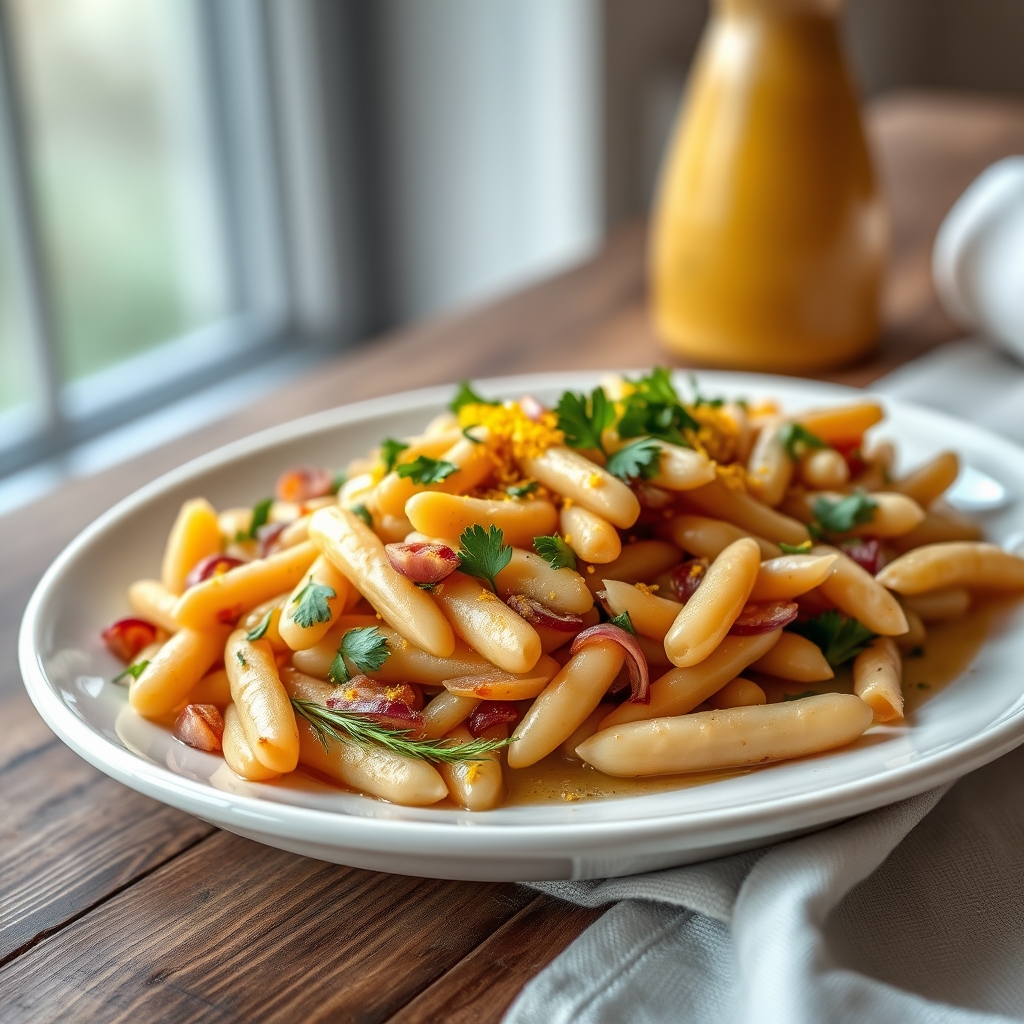
This Cannellini Bean Side Dish With Fennel, Red Onion, and Saffron is a masterclass in simplicity, allowing each ingredient to shine in a delicate balance of flavors and textures. The cannellini beans, with their creamy texture, provide a soothing base, while the crunchy freshness of the fennel and red onion adds a delightful contrast. The subtle earthy flavor of saffron threads weaves everything together, creating a dish that is both elegant and comforting. It's a perfect accompaniment to a variety of main courses, from grilled meats to roasted vegetables, and its vegan status makes it an excellent option for plant-based diets. The best part is that it requires no cooking time, making it an ideal choice for a quick and impressive side dish. With its beautiful presentation and sophisticated flavors, this dish is sure to impress your guests and leave them wanting more.
About this recipe
Vegan cannellini bean side dish
Ingredients
- 3 cups cannellini beans (with the liquid that clings to them, cooked)
- 1 tablespoon extra virgin olive oil
- 1 cup fennel (chopped)
- 1 leaf flat parsley (minced)
- 0.5 cup onion (red, chopped)
- 0.25 teaspoon saffron threads
- 6 servings salt and pepper (black, freshly ground)
- 6 servings vegetable broth (as needed)
- 2 tablespoons water (boiling)
Quantities recalculate automatically when you change the serving size.
Method
To start, combine the saffron threads with boiling water in a small heat-proof bowl or measuring cup, and set it aside for 5 minutes to allow the flavors to meld together.
Next, heat the extra virgin olive oil in a large nonstick skillet over medium heat, then add the chopped fennel and red onion, cooking until they are tender and lightly caramelized, stirring occasionally, about 5 minutes.
After that, add the cooked cannellini beans and the saffron mixture to the skillet, stirring to blend the ingredients together, and season to taste with salt and pepper, adding some vegetable broth or bean cooking liquid if the mixture seems too dry.
Finally, sprinkle the dish with minced flat parsley or fennel fronds, and serve immediately, garnished with additional parsley or fennel if desired.
Cooking tips
- Use high-quality ingredients, particularly the cannellini beans, to ensure the best flavor and texture.
- Don't overcook the fennel and onion, as they can become mushy and lose their texture.
- Use a large nonstick skillet to cook the fennel and onion, as it allows for even cooking and prevents the ingredients from sticking.
- Don't add too much saffron, as it can overpower the other flavors.
- Taste and adjust the seasoning as you go, adding more salt, pepper, or vegetable broth as needed.
- Use a small heat-proof bowl or measuring cup to steep the saffron threads, as it allows for easy mixing and prevents the threads from getting lost.
- Add the parsley or fennel fronds just before serving to preserve their freshness and flavor.
- Experiment with different types of beans or vegetables to create variations on this dish.
Substitutions
- Use navy beans or Great Northern beans as a substitute for cannellini beans, but note that they may have a slightly different texture and flavor.
- Replace the fennel with chopped celery or carrots for a different crunch and flavor.
- Use yellow onion instead of red onion for a slightly sweeter flavor.
- Omit the saffron threads for a more budget-friendly option, or substitute with a pinch of turmeric for a similar yellow color.
- Use chicken broth instead of vegetable broth for a non-vegan version of the dish.
- Add some chopped garlic or lemon juice for extra flavor and brightness.
Storage & make-ahead
This dish can be stored in the refrigerator for up to a day, but it's best to store the components separately and assemble just before serving. The cannellini beans can be cooked and stored in the refrigerator, while the fennel and onion can be chopped and stored in an airtight container. The saffron mixture can also be prepared ahead of time and stored in an airtight container. To reheat, simply combine the ingredients and adjust the seasoning as needed.
Recipe notes
The success of this dish lies in its ability to balance flavors and textures, creating a harmonious and refreshing side dish that complements a wide range of main courses. The key to its success is the quality of the ingredients, particularly the cannellini beans, which should be cooked to a creamy perfection. The fennel and red onion add a nice crunch and a touch of sweetness, while the saffron provides a subtle earthy flavor. This dish is perfect for serving alongside grilled meats, roasted vegetables, or as part of a vegan buffet. It can be made ahead of time, but it's best to add the parsley or fennel fronds just before serving to preserve their freshness. To scale it up or down, simply adjust the ingredient quantities accordingly. When it comes to equipment, a large nonstick skillet is essential for cooking the fennel and onion, as it allows for even cooking and prevents the ingredients from sticking. One thing to note is that the saffron threads can be quite potent, so it's essential to use them sparingly to avoid overpowering the other flavors. In terms of making it ahead, this dish can be prepared up to a day in advance, but it's best to store the components separately and assemble just before serving. The cannellini beans can be cooked and stored in the refrigerator, while the fennel and onion can be chopped and stored in an airtight container. The saffron mixture can also be prepared ahead of time and stored in an airtight container. When it comes to scaling it up or down, the key is to maintain the balance of flavors and textures. Simply adjust the ingredient quantities accordingly, and make sure to use a large enough skillet to cook the fennel and onion. The equipment that matters in this recipe is a large nonstick skillet, which allows for even cooking and prevents the ingredients from sticking. A small heat-proof bowl or measuring cup is also essential for steeping the saffron threads. One thing that people often get wrong when making this dish is using too much saffron, which can overpower the other flavors. It's essential to use the saffron threads sparingly and to taste, adjusting the amount according to personal preference. Finally, this dish is a great example of how simple ingredients can be combined to create something truly special. With its beautiful presentation and sophisticated flavors, it's sure to impress your guests and leave them wanting more.
Frequently asked questions
What type of beans are best for this recipe?
Cannellini beans are the best choice for this recipe, but navy beans or Great Northern beans can be used as a substitute.
Can I make this dish ahead of time?
Yes, this dish can be prepared up to a day in advance, but it's best to store the components separately and assemble just before serving.
How do I scale this recipe up or down?
To scale this recipe up or down, simply adjust the ingredient quantities accordingly, and make sure to use a large enough skillet to cook the fennel and onion.
What is the purpose of the saffron threads in this recipe?
The saffron threads add a subtle earthy flavor and a beautiful yellow color to the dish, but they can be omitted or substituted with a pinch of turmeric for a similar effect.
Can I use this recipe as a main course?
While this dish is delicious and satisfying, it's best served as a side dish or part of a larger meal, as it may not be filling enough to be a main course on its own.
Recipe source: SpoonacularEditorial text, photography and testing notes by LAODH.
Keep cooking
You might also like
Cannellini Bean Side Dish With Fennel, Red Onion, and Saffron
Vegan cannellini bean side dish
Cannellini Bean Side Dish With Fennel, Red Onion, and Saffron
Vegan cannellini bean side dish
Cannellini Bean Side Dish With Fennel, Red Onion, and Saffron
Vegan cannellini bean side dish
Cannellini Bean Side Dish With Fennel, Red Onion, and Saffron
Vegan cannellini bean side dish
Cannellini Bean Side Dish With Fennel, Red Onion, and Saffron
Vegan cannellini bean side dish
Cannellini Bean Side Dish With Fennel, Red Onion, and Saffron
Vegan cannellini bean side dish
Cannellini Bean Side Dish With Fennel, Red Onion, and Saffron
Vegan cannellini bean side dish
Cannellini Bean Side Dish With Fennel, Red Onion, and Saffron
Vegan cannellini bean side dish
Cannellini Bean Side Dish With Fennel, Red Onion, and Saffron
Vegan cannellini bean side dish
Cannellini Bean Side Dish With Fennel, Red Onion, and Saffron
Vegan cannellini bean side dish
Cannellini Bean Side Dish With Fennel, Red Onion, and Saffron
Vegan cannellini bean side dish

Butter-Bread
Vegan Butter-Bread recipe
Cannellini Bean Side Dish With Fennel, Red Onion, and Saffron
Vegan cannellini bean side dish
Cannellini Bean Side Dish With Fennel, Red Onion, and Saffron
Vegan cannellini bean side dish
Cannellini Bean Side Dish With Fennel, Red Onion, and Saffron
Vegan cannellini bean side dish
Cannellini Bean Side Dish With Fennel, Red Onion, and Saffron
Vegan cannellini bean side dish
Cannellini Bean Side Dish With Fennel, Red Onion, and Saffron
Vegan cannellini bean side dish
Cannellini Bean Side Dish With Fennel, Red Onion, and Saffron
Vegan cannellini bean side dish
Cannellini Bean Side Dish With Fennel, Red Onion, and Saffron
Vegan cannellini bean side dish
Cannellini Bean Side Dish With Fennel, Red Onion, and Saffron
Vegan cannellini bean side dish
Cannellini Bean Side Dish With Fennel, Red Onion, and Saffron
Vegan cannellini bean side dish
Cannellini Bean Side Dish With Fennel, Red Onion, and Saffron
Vegan cannellini bean side dish
Cannellini Bean Side Dish With Fennel, Red Onion, and Saffron
Vegan cannellini bean side dish
Cannellini Bean Side Dish With Fennel, Red Onion, and Saffron
Vegan cannellini bean side dish
Cannellini Bean Side Dish With Fennel, Red Onion, and Saffron
Vegan cannellini bean side dish
Cannellini Bean Side Dish With Fennel, Red Onion, and Saffron
Vegan cannellini bean side dish
Cannellini Bean Side Dish With Fennel, Red Onion, and Saffron
Vegan cannellini bean side dish
Cannellini Bean Side Dish With Fennel, Red Onion, and Saffron
Vegan cannellini bean side dish
Cannellini Bean Side Dish With Fennel, Red Onion, and Saffron
Vegan cannellini bean side dish
Cannellini Bean Side Dish With Fennel, Red Onion, and Saffron
Vegan cannellini bean side dish
Cannellini Bean Side Dish With Fennel, Red Onion, and Saffron
Vegan cannellini bean side dish
Cannellini Bean Side Dish With Fennel, Red Onion, and Saffron
Vegan cannellini bean side dish
Cannellini Bean Side Dish With Fennel, Red Onion, and Saffron
Vegan cannellini bean side dish
Cannellini Bean Side Dish With Fennel, Red Onion, and Saffron
Vegan cannellini bean side dish
Cannellini Bean Side Dish With Fennel, Red Onion, and Saffron
Vegan cannellini bean side dish
Cannellini Bean Side Dish With Fennel, Red Onion, and Saffron
Vegan cannellini bean side dish
Cannellini Bean Side Dish With Fennel, Red Onion, and Saffron
Vegan cannellini bean side dish
Cannellini Bean Side Dish With Fennel, Red Onion, and Saffron
Vegan cannellini bean side dish
Cannellini Bean Side Dish With Fennel, Red Onion, and Saffron
Vegan cannellini bean side dish
Cannellini Bean Side Dish With Fennel, Red Onion, and Saffron
Vegan cannellini bean side dish
Cannellini Bean Side Dish With Fennel, Red Onion, and Saffron
Vegan cannellini bean side dish
Cannellini Bean Side Dish With Fennel, Red Onion, and Saffron
Vegan cannellini bean side dish
Cannellini Bean Side Dish With Fennel, Red Onion, and Saffron
Vegan cannellini bean side dish
Cannellini Bean Side Dish With Fennel, Red Onion, and Saffron
Vegan cannellini bean side dish
Cannellini Bean Side Dish With Fennel, Red Onion, and Saffron
Vegan cannellini bean side dish
Cannellini Bean Side Dish With Fennel, Red Onion, and Saffron
Vegan cannellini bean side dish
Cannellini Bean Side Dish With Fennel, Red Onion, and Saffron
Vegan cannellini bean side dish
Cannellini Bean Side Dish With Fennel, Red Onion, and Saffron
Vegan cannellini bean side dish