
Beetroot & red cabbage sauerkraut
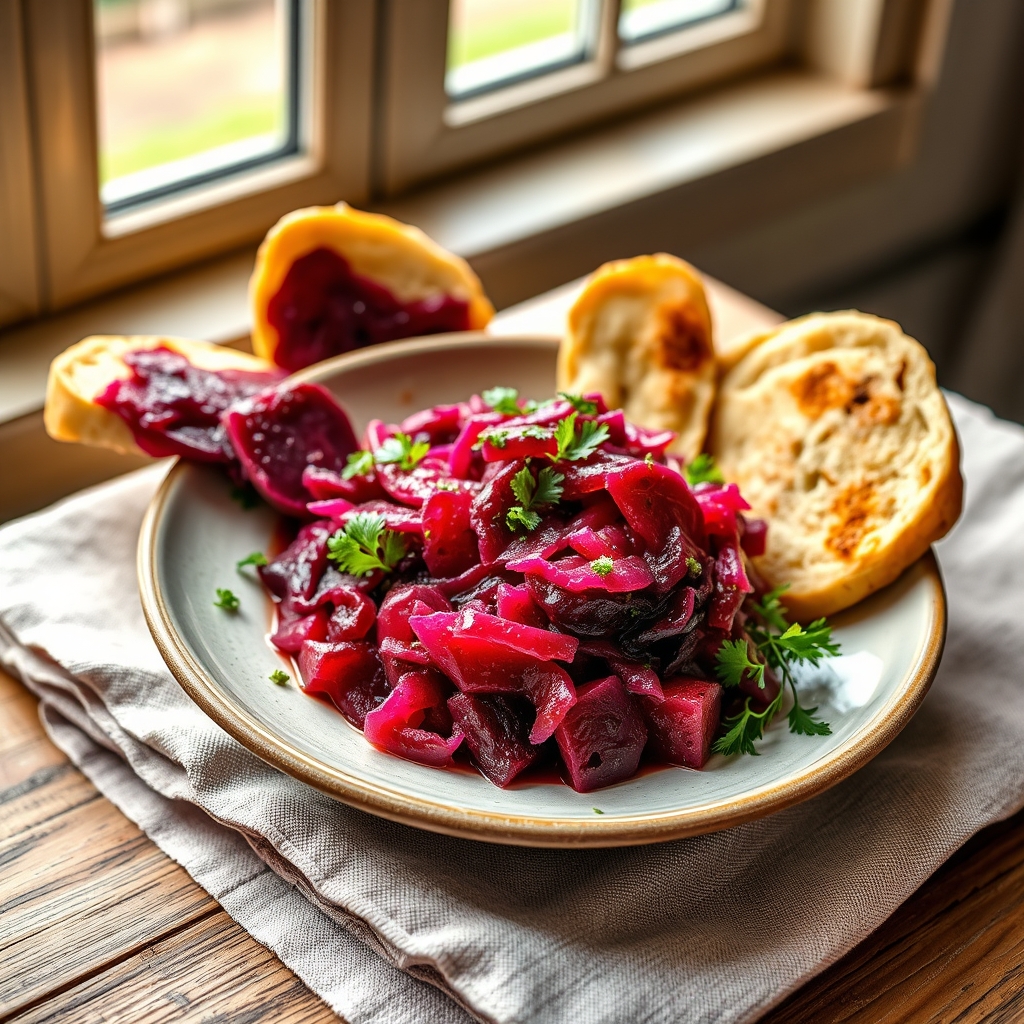
Beetroot and red cabbage sauerkraut is a traditional Polish dish that showcases the beauty of fermented vegetables, with the sweetness of beetroot and the crunch of red cabbage creating a delightful harmony of flavors and textures. This vegetarian delight is not only a treat for the taste buds, but also a great way to add some extra nutrition to your meals. The fermentation process involved in making sauerkraut is what makes it so distinctive, as it allows the natural bacteria on the vegetables to break down the sugars and create lactic acid, giving the sauerkraut its characteristic sour taste. With its vibrant colors and tangy flavor, this sauerkraut is sure to add a pop of excitement to any dish, from salads and sandwiches to soups and stews. Whether you're a seasoned foodie or just looking to try something new, beetroot and red cabbage sauerkraut is definitely worth giving a go. The best part is that it's incredibly easy to make, requiring minimal hands-on time and no cooking at all, just a bit of patience as it ferments to perfection.
About this recipe
Polish beetroot and red cabbage sauerkraut
Ingredients
- 320 g Beetroot
- 450 g Red Cabbage
- 1 small Onion
- 2 tsp Caraway Seed
- 1 tsp Sea Salt
Quantities recalculate automatically when you change the serving size.
Method
To start, combine 320g of beetroot, 450g of red cabbage, 1 small onion, 2 tsp of caraway seed, and 1 tsp of sea salt in a large bowl, then add 1-1½ tsp of freshly ground black pepper.
Using your hands, scrunch all the ingredients together for 5 minutes, making sure to mix everything well and release the juices from the vegetables. You may want to wear gloves to avoid staining your skin with the beetroot juices.
Press the vegetables down in the bowl with your hands, then cover the surface and up the side of the bowl with a large sheet of compostable cling film or a reusable beeswax wrap.
Place another similar-sized bowl on top of the vegetables, then press down hard and add anything heavy, such as packs of rice or cans, to weigh it down and allow the juices to rise to the surface.
Cover the bowl again, making sure that the vegetables are completely submerged in the juices and that the weight is evenly distributed.
Leave the sauerkraut to ferment at room temperature for at least five days, but for maximum flavor, leave it for one to five weeks, or until the bubbling subsides and the sauerkraut has reached the desired level of sourness.
After a few days, check the sauerkraut and give it a stir, then cover and weigh it down again as before. The cabbage will become increasingly sour the longer it's fermented, so taste it now and again to determine when it's ready.
When the sauerkraut has reached the desired level of sourness, transfer it to sterilized jars and keep it chilled in the fridge, where it will continue to ferment slowly and can be stored for up to six months.
Cooking tips
- Make sure to use a large enough bowl to hold all the ingredients and allow for easy mixing and fermentation.
- Use a compostable cling film or a reusable beeswax wrap to cover the bowl and create the perfect environment for fermentation.
- Add anything heavy, such as packs of rice or cans, to weigh down the vegetables and allow the juices to rise to the surface.
- Leave the sauerkraut to ferment at room temperature, away from direct sunlight and heat sources.
- Check the sauerkraut regularly to determine when it's ready and to avoid over-fermentation.
- Use freshly ground black pepper for the best flavor and aroma.
- Wear gloves when handling the beetroot to avoid staining your skin with the juices.
- Experiment with different spices and seasonings to create unique and delicious flavor variations.
Substitutions
- Use white cabbage instead of red cabbage for a different flavor and texture.
- Add some grated carrot or apple to the sauerkraut for extra sweetness and crunch.
- Use mustard seeds instead of caraway seeds for a different flavor and aroma.
- Add some chopped fresh herbs, such as parsley or dill, to the sauerkraut for extra flavor and freshness.
- Use Himalayan pink salt instead of sea salt for a different mineral profile and flavor.
- Add some grated ginger or garlic to the sauerkraut for extra spice and depth.
Storage & make-ahead
To store the sauerkraut, transfer it to sterilized jars and keep it chilled in the fridge, where it will continue to ferment slowly. The sauerkraut can be stored for up to six months in the fridge. To serve, simply scoop out the desired amount and add it to your favorite dishes. The sauerkraut can be served chilled or at room temperature, depending on your preference.
Recipe notes
One of the things that makes this sauerkraut so special is the combination of beetroot and red cabbage, which creates a beautiful pink color and a sweet and sour flavor. The caraway seeds add a nice depth and warmth to the dish, while the sea salt helps to bring out the natural flavors of the vegetables. This sauerkraut is perfect for serving as a side dish, or using as an ingredient in salads, sandwiches, and other recipes. It's also a great way to add some extra nutrition to your meals, as it's high in vitamins and minerals and contains beneficial probiotics. To make it ahead, simply prepare the ingredients and let them ferment for the desired amount of time, then transfer them to the fridge to slow down the fermentation process. To scale it up or down, simply adjust the quantities of the ingredients accordingly, keeping in mind that the fermentation time may vary depending on the size of the batch. When it comes to equipment, a large bowl and a way to weigh down the vegetables are essential, as they allow the juices to rise to the surface and create the perfect environment for fermentation. One thing that people often get wrong when making sauerkraut is not letting it ferment for long enough, which can result in a sauerkraut that is not sour enough or has an unpleasant flavor. In terms of what to serve with it, the possibilities are endless. It's great on its own as a side dish, or paired with other traditional Polish dishes like pierogies or bigos. It's also delicious added to salads, sandwiches, and wraps, or used as a topping for soups and stews. For a more substantial meal, try pairing it with some grilled meats or vegetables, or using it as an ingredient in a hearty stew or braise. Another great thing about this sauerkraut is that it's incredibly versatile, and can be made ahead and stored in the fridge for up to six months. This makes it a great ingredient to have on hand, as it can be pulled out and used at a moment's notice. To store it, simply transfer it to a sterilized jar and keep it in the fridge, where it will continue to ferment slowly. The equipment needed to make this sauerkraut is minimal, but it's essential to have a large bowl and a way to weigh down the vegetables. A compostable cling film or a beeswax wrap is also necessary, as it allows the juices to rise to the surface and creates the perfect environment for fermentation. Overall, beetroot and red cabbage sauerkraut is a delicious and nutritious addition to any meal, and is sure to become a favorite among anyone who tries it. With its vibrant colors, tangy flavor, and numerous health benefits, it's a great way to add some excitement to your meals and improve your overall health and wellbeing.
Frequently asked questions
What is the minimum fermentation time for the sauerkraut?
At least five days
Can I use a food processor to shred the vegetables?
No, it's best to shred the vegetables by hand to avoid releasing too much juice and creating a sauerkraut that is too wet.
How do I know when the sauerkraut is ready?
The sauerkraut is ready when it has reached the desired level of sourness and the bubbling has subsided.
Can I add other ingredients to the sauerkraut during fermentation?
No, it's best to add other ingredients after the fermentation process is complete, as they can affect the fermentation and create off-flavors.
How do I store the sauerkraut after it's been fermented?
The sauerkraut should be transferred to sterilized jars and stored in the fridge, where it will continue to ferment slowly and can be kept for up to six months.
Recipe source: TheMealDBEditorial text, photography and testing notes by LAODH.
Keep cooking
You might also like
Beetroot & red cabbage sauerkraut
Polish beetroot and red cabbage sauerkraut
Beetroot & red cabbage sauerkraut
Polish beetroot and red cabbage sauerkraut
Beetroot & red cabbage sauerkraut
Polish beetroot and red cabbage sauerkraut
Beetroot & red cabbage sauerkraut
Polish beetroot and red cabbage sauerkraut
Beetroot & red cabbage sauerkraut
Polish beetroot and red cabbage sauerkraut
Beetroot & red cabbage sauerkraut
Polish beetroot and red cabbage sauerkraut
Beetroot & red cabbage sauerkraut
Polish beetroot and red cabbage sauerkraut
Beetroot & red cabbage sauerkraut
Polish beetroot and red cabbage sauerkraut
Beetroot & red cabbage sauerkraut
Polish beetroot and red cabbage sauerkraut
Beetroot & red cabbage sauerkraut
Polish beetroot and red cabbage sauerkraut
Beetroot & red cabbage sauerkraut
Polish beetroot and red cabbage sauerkraut

Balsamic Marinated Lamb Chops
Balsamic marinated lamb chops
Beetroot & red cabbage sauerkraut
Polish beetroot and red cabbage sauerkraut
Beetroot & red cabbage sauerkraut
Polish beetroot and red cabbage sauerkraut
Beetroot & red cabbage sauerkraut
Polish beetroot and red cabbage sauerkraut
Beetroot & red cabbage sauerkraut
Polish beetroot and red cabbage sauerkraut
Beetroot & red cabbage sauerkraut
Polish beetroot and red cabbage sauerkraut
Beetroot & red cabbage sauerkraut
Polish beetroot and red cabbage sauerkraut
Beetroot & red cabbage sauerkraut
Polish beetroot and red cabbage sauerkraut
Beetroot & red cabbage sauerkraut
Polish beetroot and red cabbage sauerkraut
Beetroot & red cabbage sauerkraut
Polish beetroot and red cabbage sauerkraut
Beetroot & red cabbage sauerkraut
Polish beetroot and red cabbage sauerkraut
Beetroot & red cabbage sauerkraut
Polish beetroot and red cabbage sauerkraut
Beetroot & red cabbage sauerkraut
Polish beetroot and red cabbage sauerkraut
Beetroot & red cabbage sauerkraut
Polish beetroot and red cabbage sauerkraut
Beetroot & red cabbage sauerkraut
Polish beetroot and red cabbage sauerkraut
Beetroot & red cabbage sauerkraut
Polish beetroot and red cabbage sauerkraut
Beetroot & red cabbage sauerkraut
Polish beetroot and red cabbage sauerkraut
Beetroot & red cabbage sauerkraut
Polish beetroot and red cabbage sauerkraut
Beetroot & red cabbage sauerkraut
Polish beetroot and red cabbage sauerkraut
Beetroot & red cabbage sauerkraut
Polish beetroot and red cabbage sauerkraut
Beetroot & red cabbage sauerkraut
Polish beetroot and red cabbage sauerkraut
Beetroot & red cabbage sauerkraut
Polish beetroot and red cabbage sauerkraut
Beetroot & red cabbage sauerkraut
Polish beetroot and red cabbage sauerkraut
Beetroot & red cabbage sauerkraut
Polish beetroot and red cabbage sauerkraut
Beetroot & red cabbage sauerkraut
Polish beetroot and red cabbage sauerkraut
Beetroot & red cabbage sauerkraut
Polish beetroot and red cabbage sauerkraut
Beetroot & red cabbage sauerkraut
Polish beetroot and red cabbage sauerkraut
Beetroot & red cabbage sauerkraut
Polish beetroot and red cabbage sauerkraut
Beetroot & red cabbage sauerkraut
Polish beetroot and red cabbage sauerkraut
Beetroot & red cabbage sauerkraut
Polish beetroot and red cabbage sauerkraut
Beetroot & red cabbage sauerkraut
Polish beetroot and red cabbage sauerkraut
Beetroot & red cabbage sauerkraut
Polish beetroot and red cabbage sauerkraut
Beetroot & red cabbage sauerkraut
Polish beetroot and red cabbage sauerkraut
Beetroot & red cabbage sauerkraut
Polish beetroot and red cabbage sauerkraut
Beetroot & red cabbage sauerkraut
Polish beetroot and red cabbage sauerkraut
Beetroot & red cabbage sauerkraut
Polish beetroot and red cabbage sauerkraut
Beetroot & red cabbage sauerkraut
Polish beetroot and red cabbage sauerkraut